
As I grow older and I really look at the world around me, I get a bit disappointed. Things feel like they’re in complete disrepair, to such a degree I struggle to even begin to construct a plan to put them all back together again. In just my small town there are so many issues, one of the major ones being car accidents. Where I live are three of the most dangerous circuits in the country, leading to some of the more severe accident rates in the country as well. It’s a small town, no more than 26,000 people. Not the smallest town, but not big enough for the type of problems we have here, accidents being only one of many.
I notice these problems and I begin to become angry. How did this happen? What about all of the residents that were supposed to care before me? Where were they and why did they let it get so bad? It sends me into a spiral that’s difficult to get out of. I begin to hate the place I live and the people that live around me with a deep passion; a passion born purely out of a desire for change. It is that part of me, that impassioned spirit, that then connects so deeply with the story of Danchi Days.
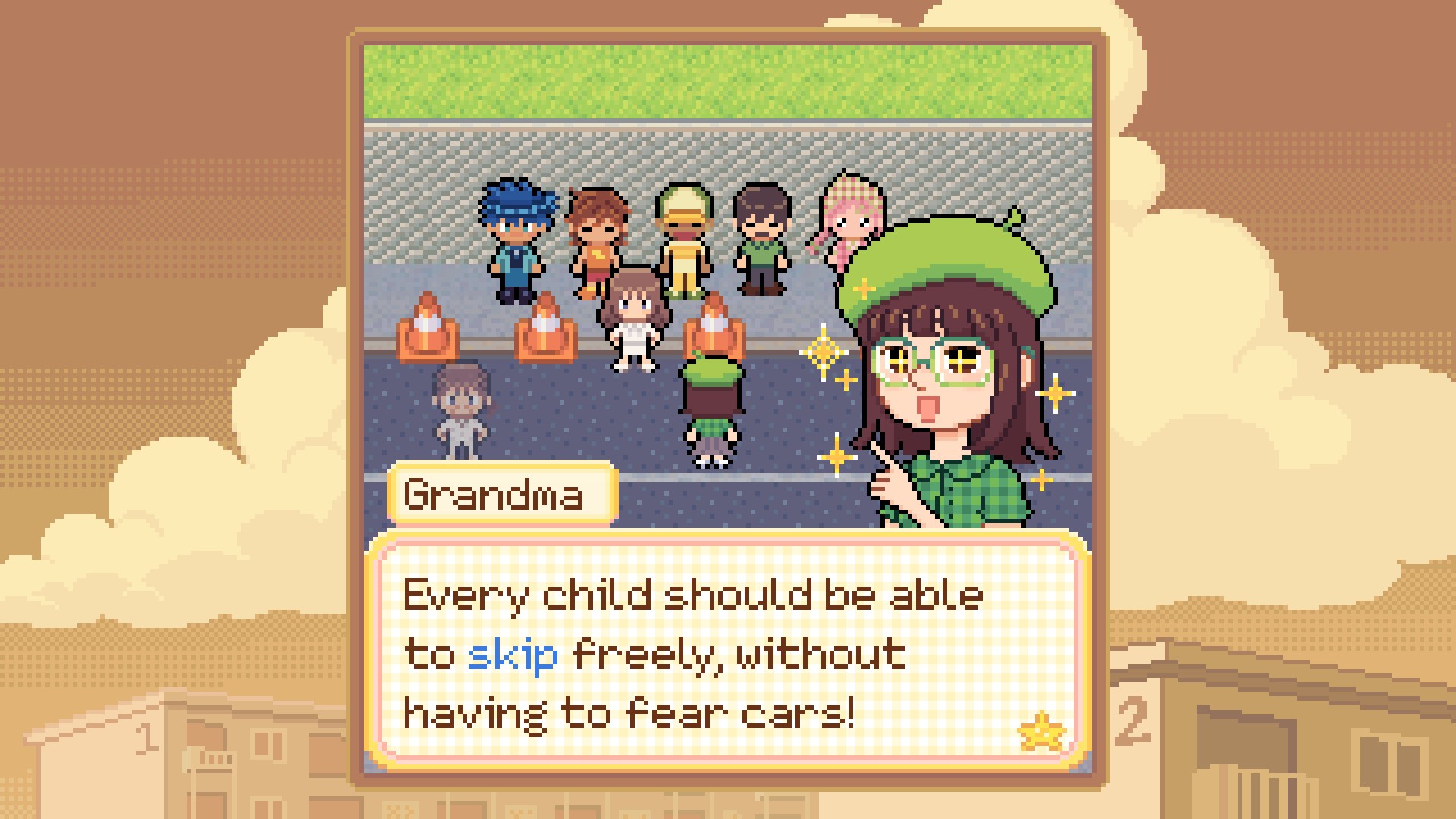
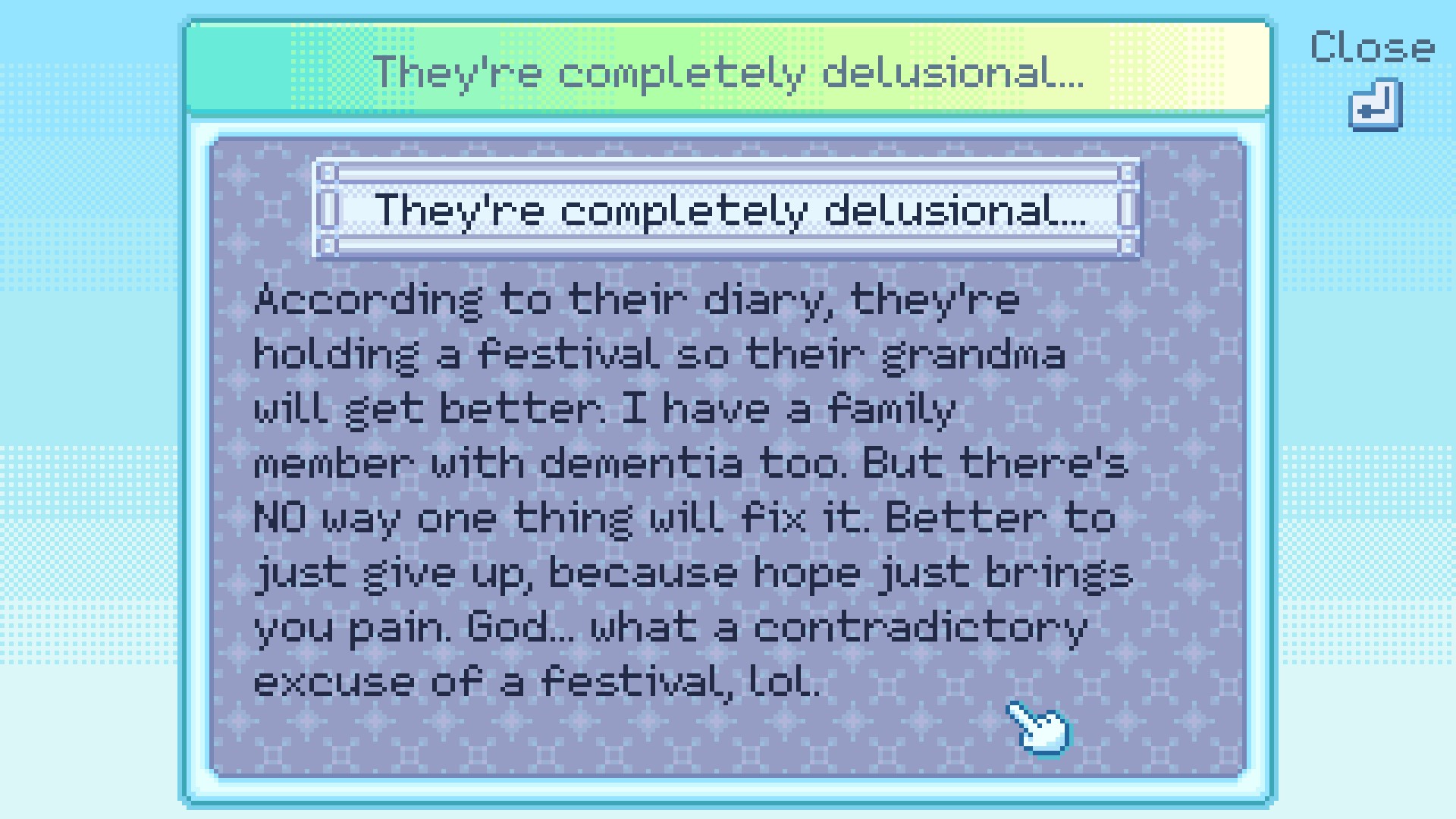
Danchi Days is a brand new slice-of-life adventure game where you play as Hoshino, a 12-year-old girl motivated to see the danchi's Summer Festival revived. Why? Well it starts off with a desire to see her grandmother, now succumbing to dementia, get better. In Hoshino’s eyes, if she can just get the Summer Festival back up and running, which stopped running the year she was born, Grandma will get better and start to remember everyday life again. It is this thought that pushes Hoshino forward through all challenges, all calls for her to give up, and an extremely bitter resident’s near daily blogging that mocks both her, the residents, and the danchi itself.
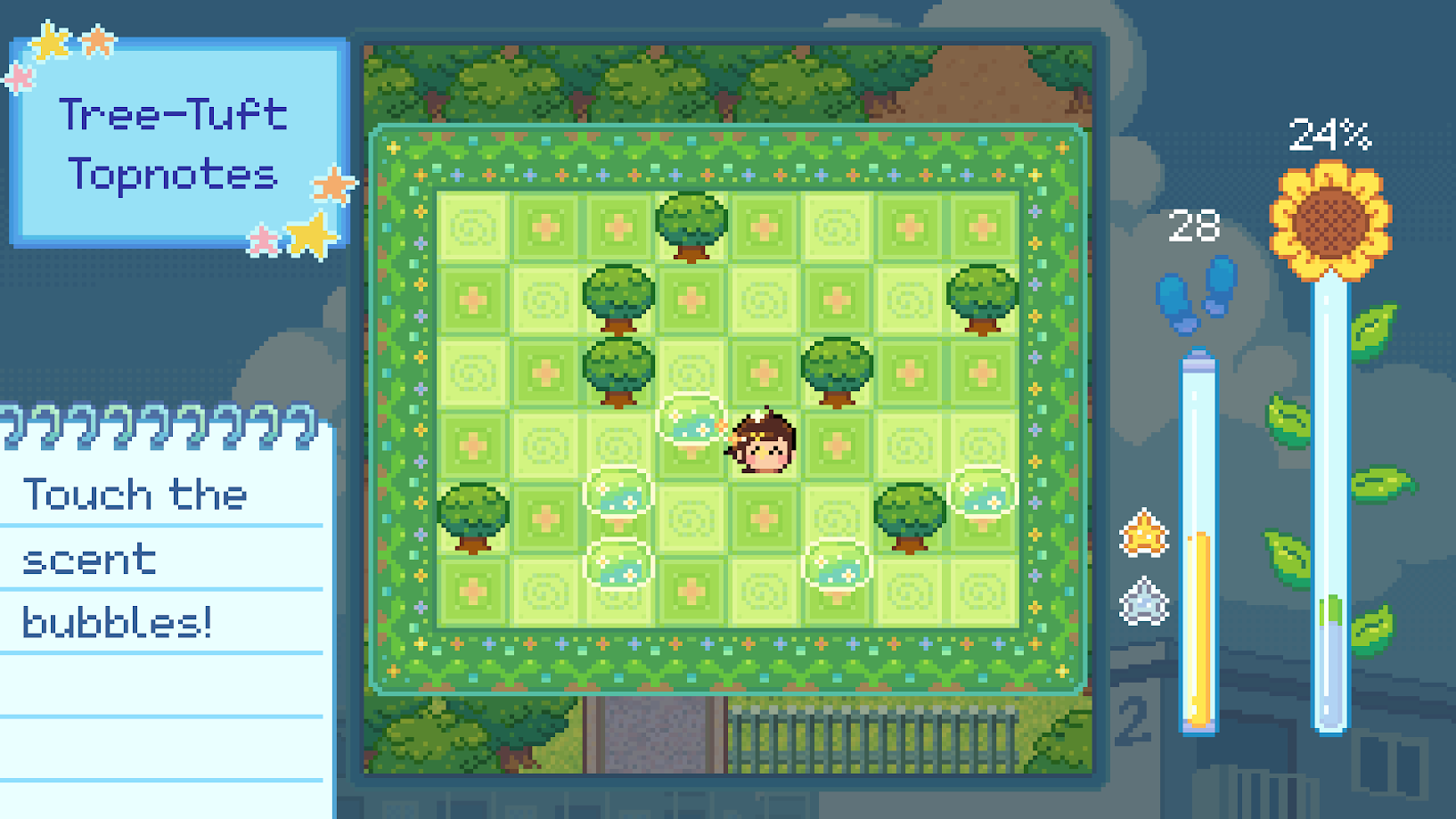
Through the act of talking with her neighbors, exploring the danchi, and 'Looking' and 'Sensing', Hoshino comes to learn how to repair broken bridges, hearts, and memories. Through her willingness to listen to others and empathize she is able to bring life back to a dying danchi and revitalize the Summer Festival. Mini games and gentle logic puzzles serve as the gameplay that keeps the plot moving along and the player engaged, with each and every puzzle or mini game tying into lessons we learn from each resident.
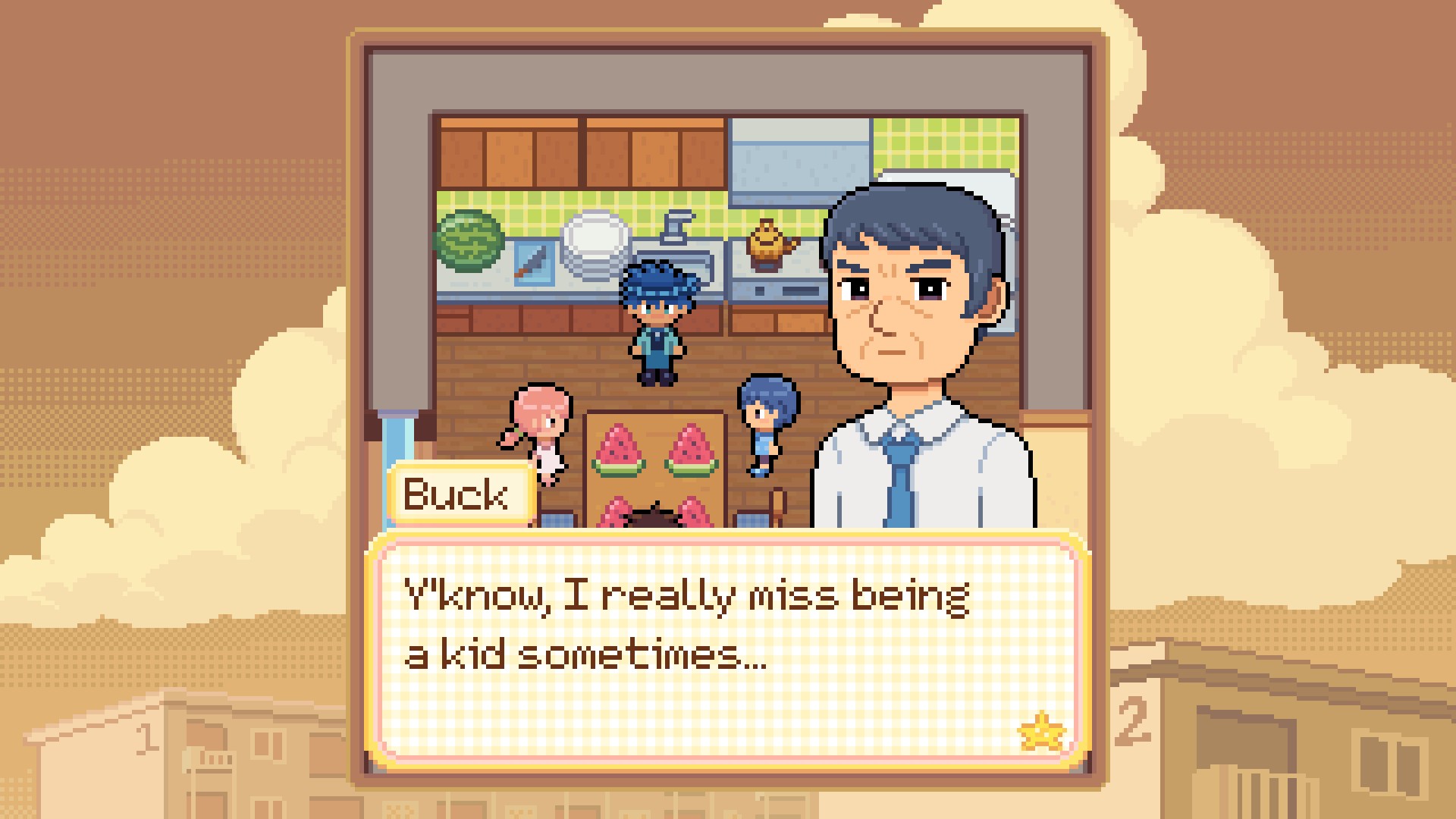
Hoshino is a beautifully motivated girl and she spends every waking minute for the next 10 days running around, inviting residents, solving their problems, and learning about the danchi’s history. Through learning about the danchi, Hoshino comes across memories of old. Sometimes these are memories of Hoshino’s childhood, connecting us to a location or a particular event. Other times they’re the memories of residents you’re helping out; reminiscing over a time passed. Finally there are memories of your grandmother’s; cherished things they are, as she is losing her memory more with each passing conversation. Through these memories you are privy to things others are not. You are able to see how the danchi used to be; vibrant, full of life, adults working hard to ensure the danchi was a safe, loving, and educational place for all the children that lived there. There were races, festivals, shops, shows for the children, campaigns to protect the town when things threatened it, and so on.
Then you come back to reality. The buildings, once spotless, now have cracks running along every wall the eye can see. The warm community now cold and distant, no longer speaking to one another. Shops once open and bustling are closed and boarded up. Neighbors that once loved one another and spoke every day, now don’t even speak to one another. The town feels completely dead, depressed, forgotten about and left to die. And this decline is mirrored in much of the populace.
There’s a common plot point throughout the story that I couldn’t help but focus on. Perhaps this is because I, personally, find myself disgruntled with the previous generations. I myself have often looked to the destruction around me and bemoaned “Gen X” for, seemingly, giving up.
I bemoaned them here too.
These adults, when children, were given ample opportunity for success; we see it in nearly every single flashback. The grandparents, when still just parents, put their all into the danchi, their home. They had a town council to assist children in daily tasks and would teach them through fun skits where each council member would pretend they were super heroes. They had eating contests, races, festivals, free treats, they created a song and dance just to protect the children from traffic - the adults did everything in their power to not only raise their children but raise them into a world that would foster their love for life, the danchi, and their neighbors.
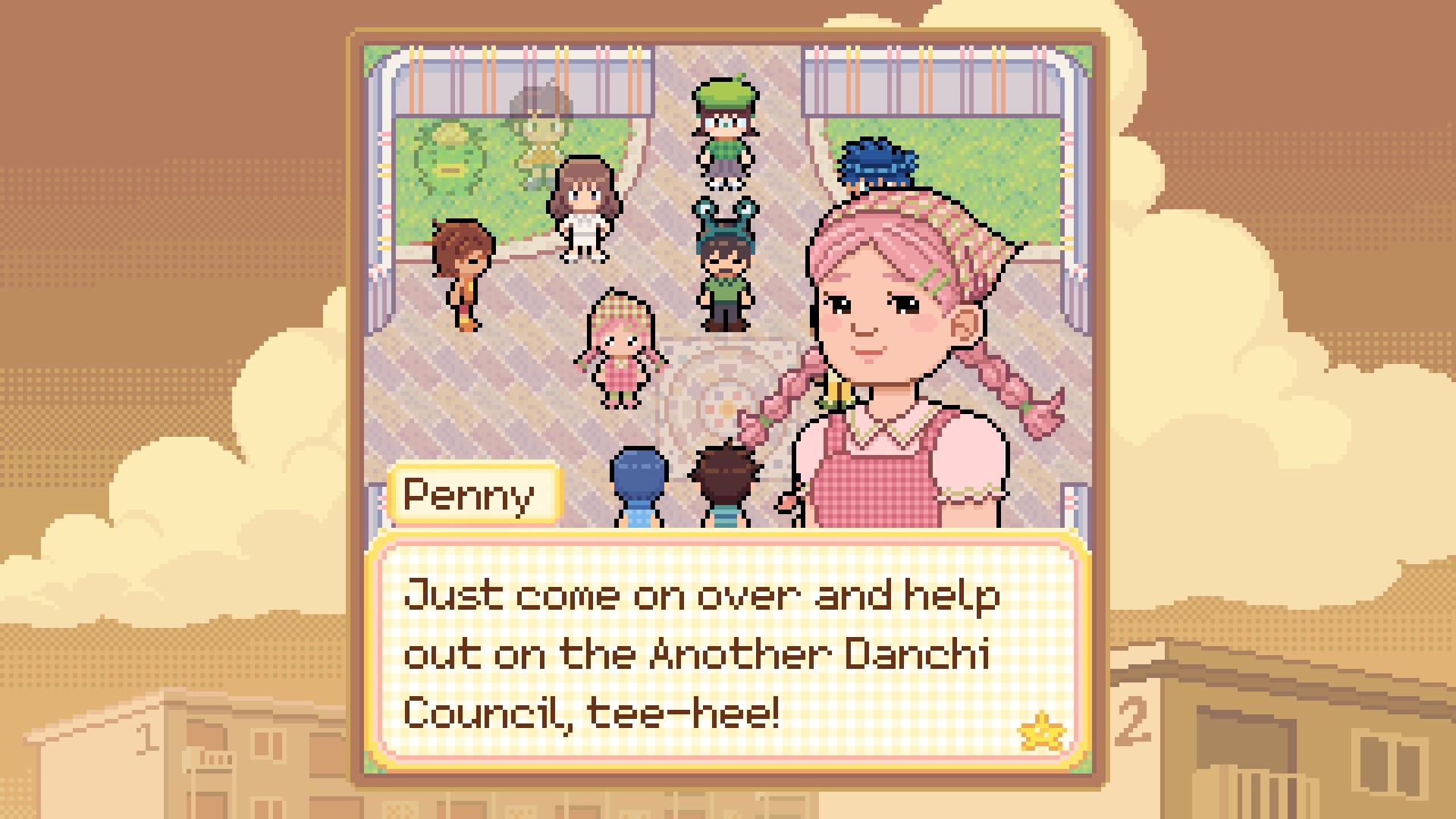
Yet when we’re back in Hoshino’s shoes, back in the real world, we see none of the adults did the same for us and our generation. The moment all the grandparents stopped working so hard, when they had to retire, it all fell to the wayside. No more festivals, no more races, no more free treats, no more council to protect the danchi.
The danchi didn’t just magically fall into disrepair, it was neglected to that point.
And when the danchi is so often, in the story, a direct mirror for the older residents within it, does that not tell you something about the grandparents that are now in decline as well? I suppose I’m not the one to say, but it sure made me feel a certain way when experiencing it and it sure made me look to the parents of these children, grasping to make their danchi better, and wonder where they were the whole time.
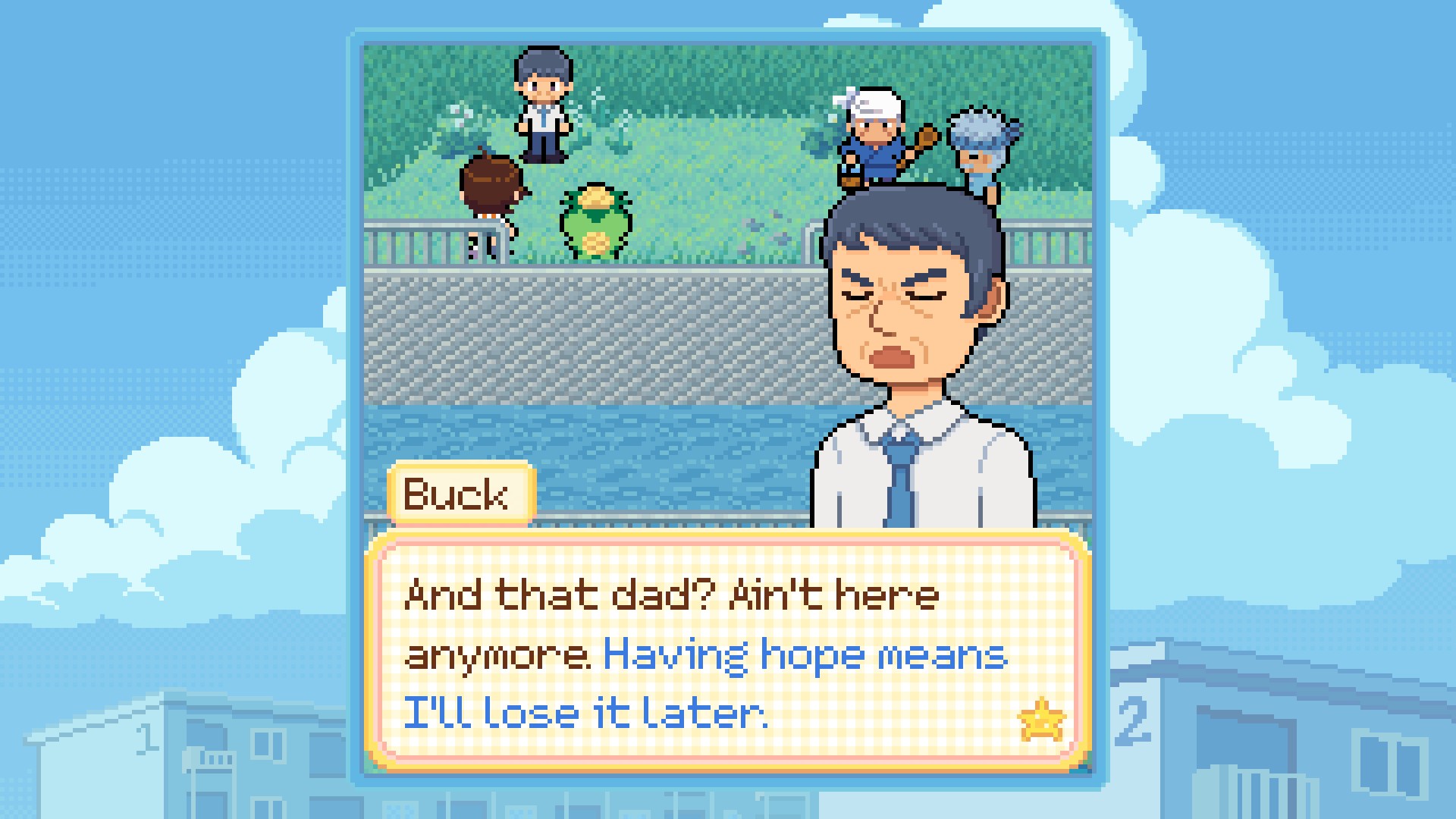
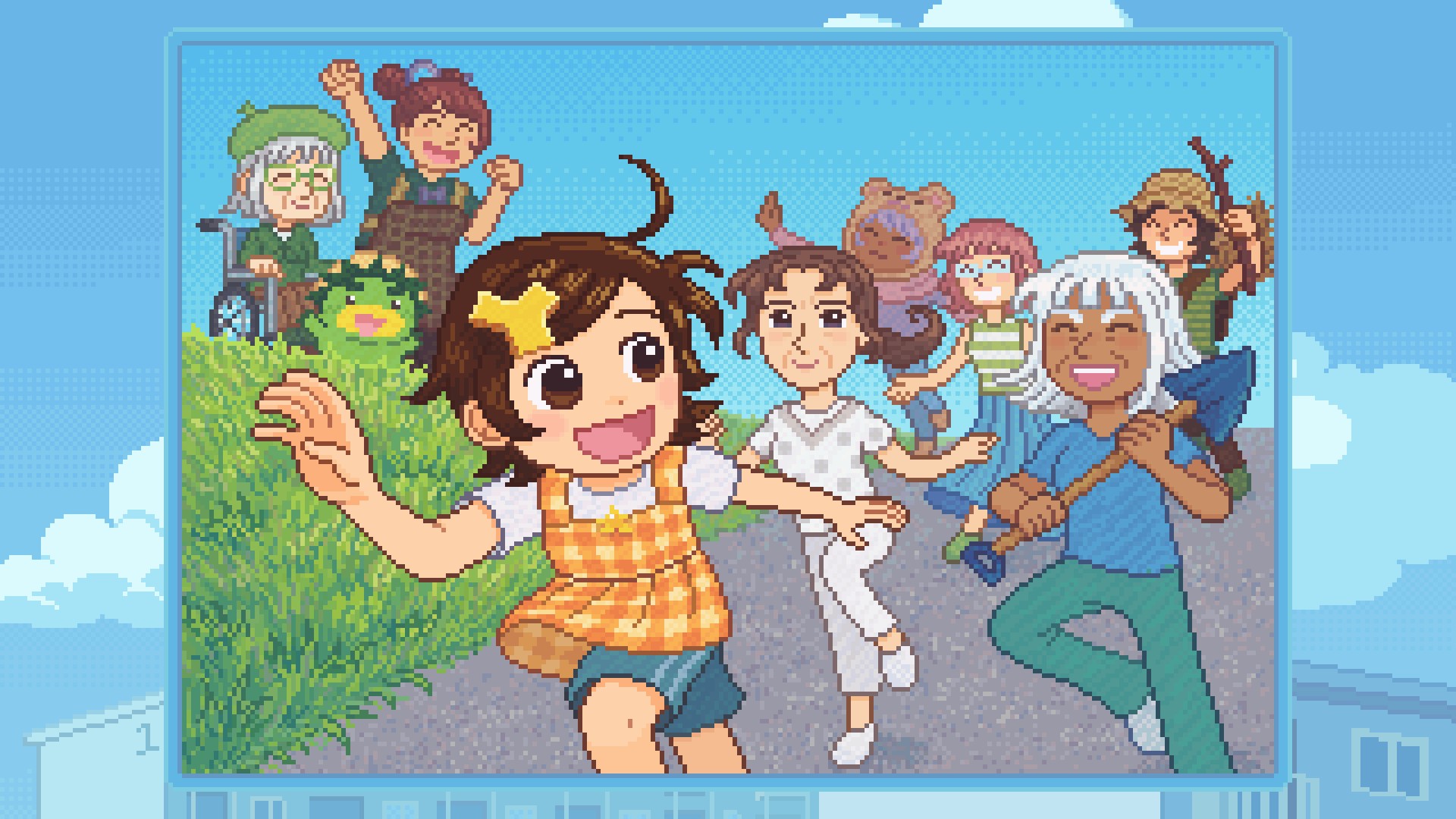
Because, spoiler, by the end of the game you do it; you revive the Summer Festival. It’s beautiful and, through all your effort and hard work, you’ve not only made the danchi a more lively place to live, you’ve also connected neighbors with one another again. Make no mistake, it was no simple task to get everyone back together and talking. As Hoshino you run around all day long across the entire danchi doing task after task after task for your neighbors; thinking outside the box or in increasingly empathetic ways to decipher puzzles and make someone smile. And you’re only 12! Yet you still manage it, all on your own. Imagine what an adult could have done, especially if they didn’t wait for the danchi to get so bad to begin with or let all their neighborly connections die.
Hoshino is a small child, so she cannot wrangle with these concepts yet. She cannot look at the older generation around her and ask “So what were you doing all this time?” She can barely come to terms with her grandmother’s failing health.
However, I am no 12 year old, I can ask these questions. And so I do.
And yet, there’s no real answer. They simply did not and that’s all there is to it. Getting angry? Wanting the danchi to just go away because it isn’t what I want? Well, that does nothing to fix the problems, does it? Pointing fingers is how we all got in this mess to begin with. Aging, changing, the fear of it all, the daunting task of it all falling on your shoulders now as your parent slowly withers away - it pushed all these characters apart and they are still on their own journeys to figure out how to wrangle with those feelings, even as the credits roll on screen.
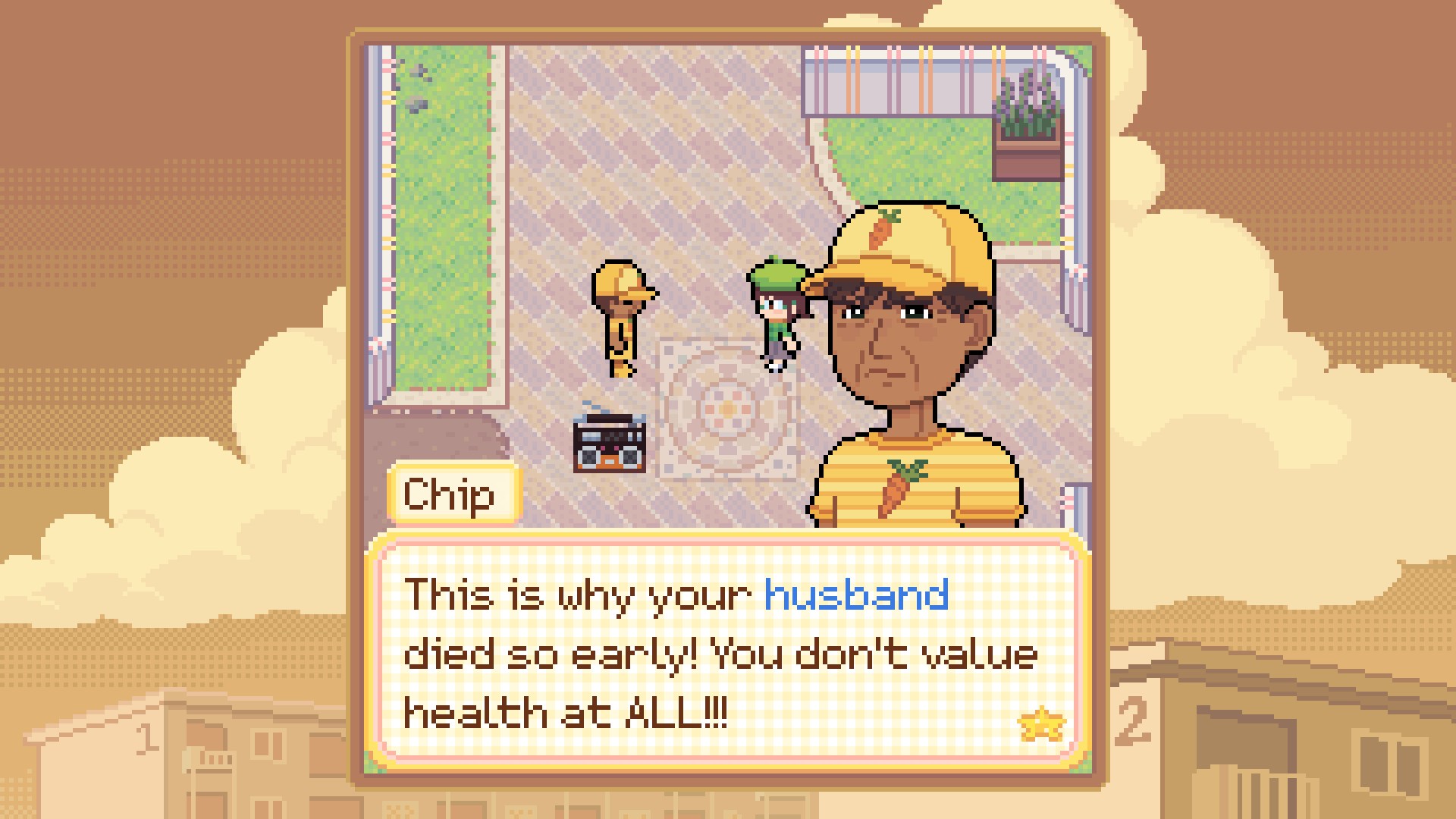
Throughout my entire journey in this game I felt an intense bittersweetness. A contradiction in my heart. A betweenness, if you will.
On the one hand this was an extremely nostalgic, beautiful, bright, and whimsical slice-of-life game. I played so many Game Boy games growing up it’s hard to even remember them all. The meandering nature of these stories and experiences is perfectly replicated in this game. The way you could talk for hours on end to each and every resident and still discover something new about them was brilliantly done; something I haven’t experienced since I played similar games back when I was a child. Each day holding new adventures, new stories, new ways to interact with the world and its residents was done phenomenally and I couldn’t help but spend days of my time with all of these neighbors, laughing and crying as if they were the residents in my own town.
On the other hand this was a sad tale. There is no cure for dementia and this is no spoiler. Our story takes place in the 2000s and, in 2026, there still is no cure. Grandma won’t magically get better due to some festival and we know that, even from the beginning of the game. There is no stopping the clock, no turning back the age we all wear on our skin, no apology for the times the adults weren’t there for us; nothing. What’s been done is done and all we can do is move forward. And so we do. We move forward and we look back only long enough to learn from past mistakes.
Were our parents the best to us? Did they do all they could to raise us well and raise us into a world that would be worth raising our kids into? Well, no, I don’t think they did. But what would be the use in crying about it all the time? Would it fix anything? Make the world a better place for future generations?
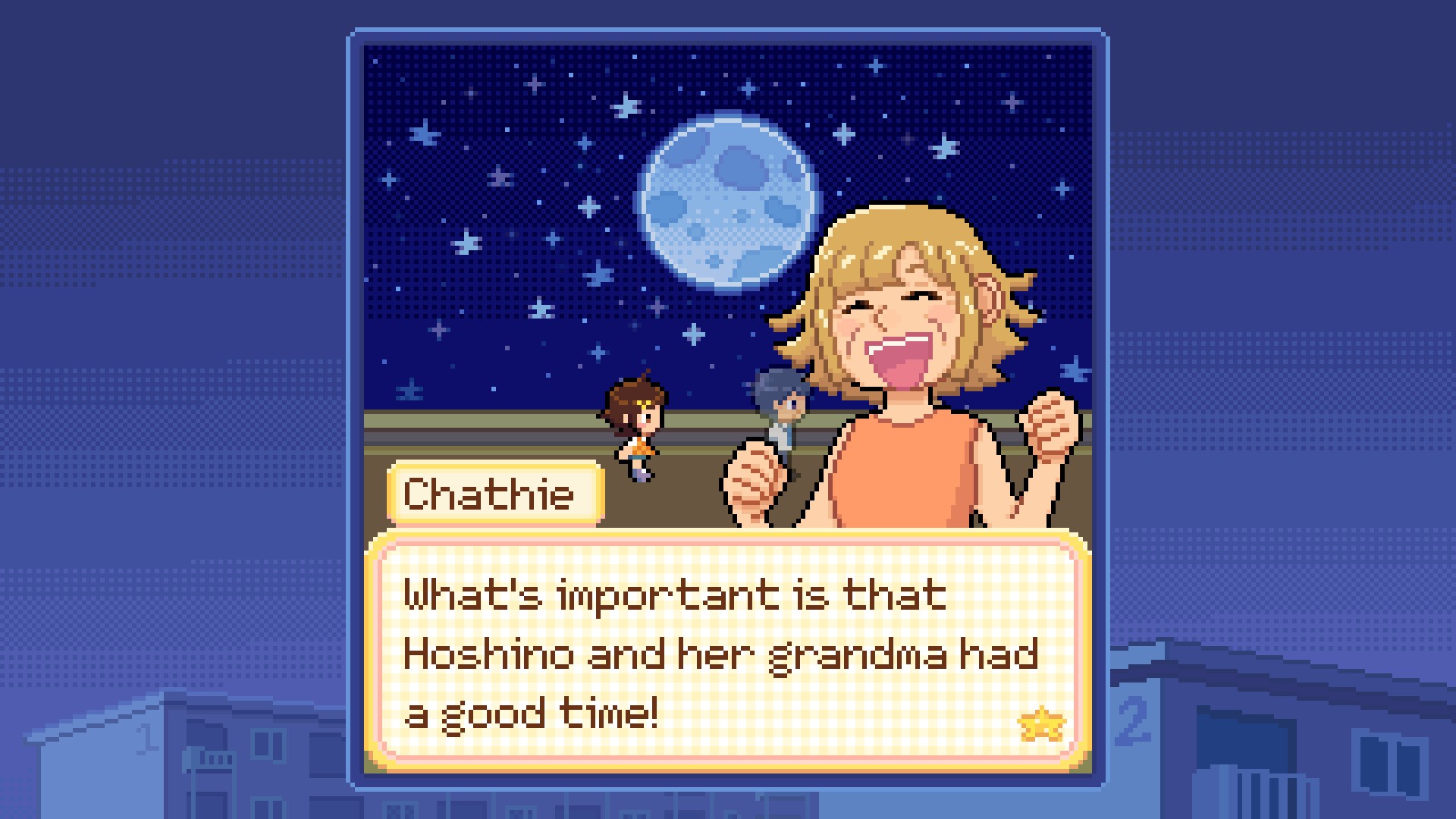
Throughout the game there is a character that is constantly putting down what Hoshino is doing. Any step toward progress is another opportunity for this character to tear her, the festival, and the danchi down. They spend the entire game doing this and it does nothing but make their soul black as night and depress those around them.
Meanwhile, despite any shortcomings Hoshino may come across, she persists. She spreads joy and love and rebuilds her community no matter what any detractor could possibly say. Every obstacle is just another puzzle for her (and us) to solve and it’s always rewarding doing so. Maybe her work didn’t completely “fix” her grandmother, but that’s life. Nothing is perfect and it never will be. The joy in this life is the doing and it’s a stark reminder that, regardless of what came before us, we can always be the change we want to see in the world.
There’s much more I want to say about this game. It was truly a stunning experience that made me feel like a kid again. It’s been a very long time since I’ve played something that felt so authentic to the period it was representing, both in terms of the real life depictions of 2000s Japanese living and in terms of the games that would have come out during that period. I really felt like I did as a child, playing a game for the first time and sinking hundreds of hours into an experience that felt like it could truly go on forever and ever. Perhaps, if I played long enough, I could peel back the screen and step into this world.
The music was gorgeous and never felt annoying or repetitive. Actually, I was consistently excited to hear each varying track when entering a different zone or new cutscene. All the stories with each neighbor were endearing and heartwarming; genuinely every single one of them. These stories motivated me to go the extra mile, see every storyline through to its end, and put in the work to get every single neighbor to RSVP to the Summer Festival. I adored the constant mirroring of the plot and its characters through our helper Moro-Q, through the buildings and their decline, through all the residents, through all their stories and their memories; it was all masterfully done. The puzzles were all endearing, from the Sensing puzzles down to the world puzzles; every single one of them felt unique and connected me to the world and the residents even more.
There is just so much to this little game. It has so much to say in every moment with every character, every task, and every building.
My main takeaway?
Enjoying every moment to the fullest, and that’s what I did. I spent almost 20 hours roaming this world, taking in every screen, clicking on every blooming flower, talking to every resident, and living the life of 12-year-old Hoshino completely. It was beautiful, sad, happy, and completely contradictory; just like the human heart and our fickle emotions. I loved every single moment of it. Check out Danchi Days, now out on Steam, and enjoy the meandering we so lack in our modern, fast-moving world.
**Disclosure: A key was provided for this review**