
It’s easy to be angry. It’s easy to get upset, to have hurt feelings, to let the negative infect your headspace. It’s easy to let personal experience taint our field of view. It’s easy to become inundated with emotions that swirl in your head until it taints all your interactions.
It’s hard to understand. It’s hard to empathize, to let things go, to let bygones be just that. It’s hard to see the forest for the trees, especially when seeing the forest involves a lot of introspection.
One of my favorite pieces of media ever, Neon Genesis Evangelion, deals with this topic heavily.
If you don’t know the story, it’s massively complicated, but the general gist is that adults force a bunch of children to pilot gigantic mechs in an effort to stop a second world apocalypse. Through this, the children are subject not only to gallons of physical abuse and trauma, but also gallons of mental abuse and trauma. Each child starts by dealing with generational trauma, which then spreads like a disease into their day to day life with friends, family, colleagues, and work. This ends up creating new pathways of abuse and trauma that infect everyone around them, leading to only more suffering and despair. Much of this happens because no one is able to communicate; or they simply don’t try.
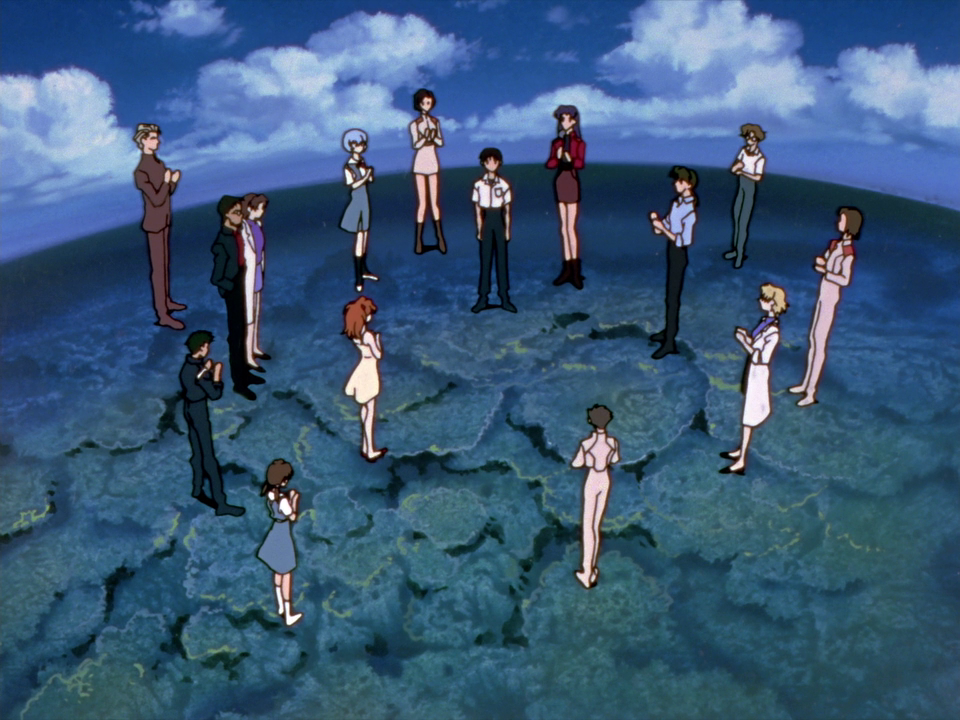
In a moment of pure bliss near the very end of the show everyone understands one another. Finally. All the words they wouldn’t say, all the feelings they couldn’t express are laid bare and there is true understanding among these friends and families. Our main character, Shinji, finally sees that everyone wasn’t against him, personally, they were just dealing with their own baggage that consumed them in a way that kept them from reaching out. It’s beautiful.
In Desktop Explorer we get to explore a lot of these same themes through the lens of a young woman, who I will refer to as Guppy. Her uncle Hal has gotten sick, seemingly with a form of dementia, and has left her a computer. As you explore this computer, uncovering lost memories, secrets, and programs you learn about the trauma that each owner of this computer went through and how it impacted their life, their relationships, and their memory.
Minor spoilers for the game going forward, as I will be talking about some more in depth moments from the plot of the game and some of its puzzles. During our time with Hal’s login, (there are 3 different logins for this computer, Halibut, Maxine, and Admin), we find out that he not only is currently suffering from some form of dementia, as mentioned earlier, but also suffered from (and may still be suffering from) dissociative amnesia. Dissociative amnesia is specifically when the person in question cannot remember or recall personal information/memories, usually due to a traumatic event surrounding said information/memories. While I won’t go into detail about what has caused this in Hal, it plays into our themes of trauma negatively impacting our memories, our relationships, and our lives going forward. Hal, for one reason or another, was unable to reconcile with a past memory and it festered like a wound and spread to other parts of his life and his mind, negatively impacting him.
Solving some pretty complicated puzzles that feel more like boss fights than simple logic, we are finally rewarded with our next user login, Maxine. Diving into Maxine’s documents and programs reveals a child going through the ringer. Similar to Shinji from Evangelion, Maxine’s family is broken and the brunt of the negativity is put on her shoulders. She deals with not only the complicated emotions of losing the family she once cherished, but also the complex emotions that come with being a teenager and wanting to finally make her own path in this world. Fighting against the tide of her parents' insistence to stay trapped in the past, she does everything she can to not only grow into a better person but also remember that everyone is trying their best. She affords a lot of understanding to those around her, even when she isn’t afforded the same. She makes mistakes that are irreversible, but always on the path to fix things or make them better. Unfortunately, she just didn’t have the power necessary to make the changes she wanted to see. The more I think of Maxine the more I find her to be a wonderful mirror to Shinji’s character. Shinji continues to get into the EVA, the mech, in an effort to save the people around him, just as Maxine continued to play through these puzzles. Shinji reaches out to those around him in an attempt to understand them and their perspectives. He dreams of a better world, but he isn’t afforded the knowledge needed to truly change things. Those around him don’t open up when he reaches out. If there is no door you can’t pass the unscalable wall, no matter what you try. We can try to make positive connections, fix traumas, mend relationships, but it’s always a two-way street.
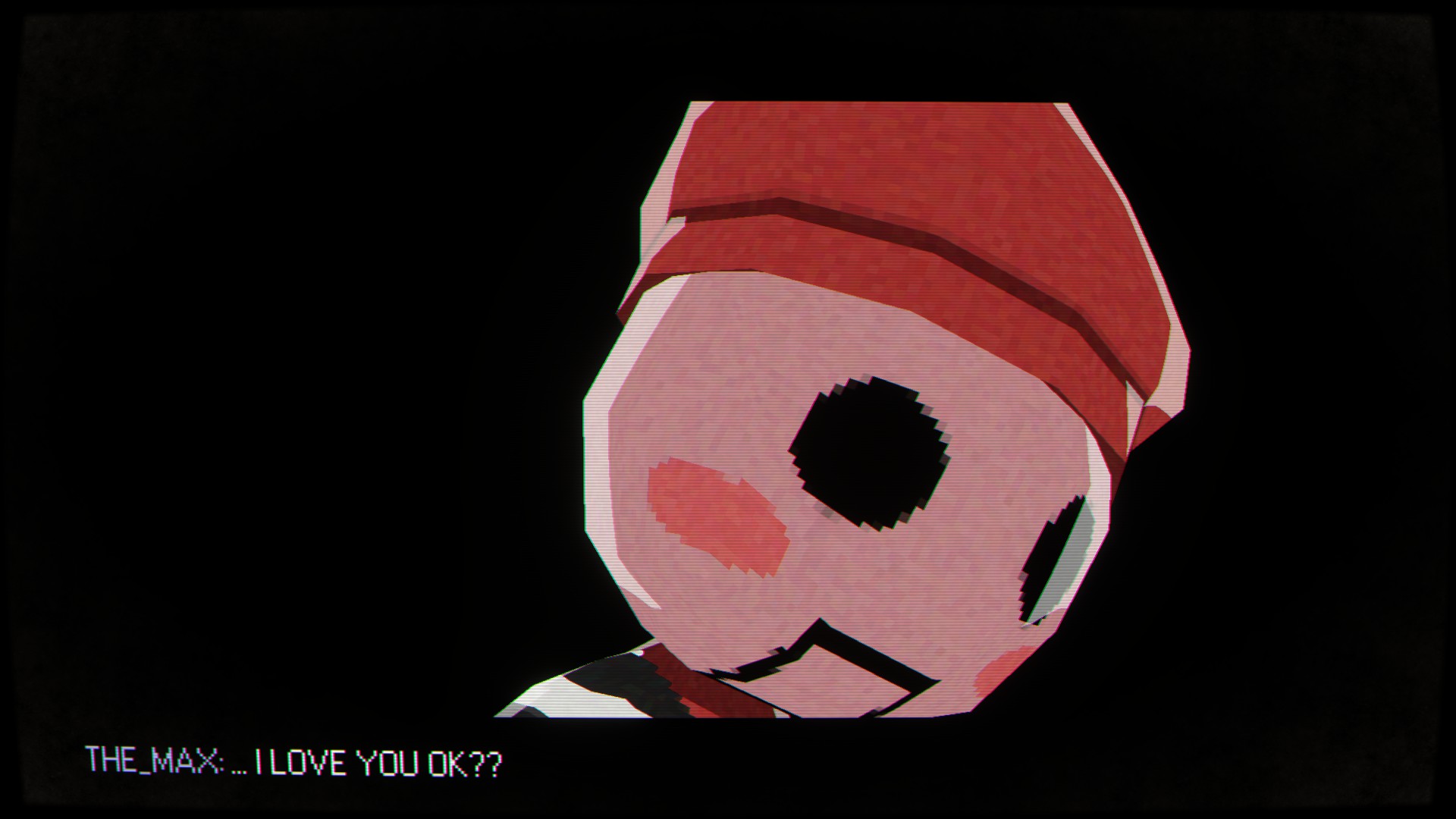
As we continue through the game we eventually come upon the Admin account. Again, being as spoiler-free as I can be while discussing this, we see a person embroiled in negativity; so much so it is literally leaking out from them and into the computer and its programs. It seeps into the other users’ logins, into their personal apps, their notes, everything. It feels malicious and evil, replaying these user’s worst moments in front of them again and again as sick puzzles. It deletes their progress if it feels it isn’t progress in the right direction. It mocks them, laughs at them, makes them feel like nothing; and every little bit of it was because of Admin. And yet, as we near the end of Admin’s journey and we’re at the height of anger towards them, we see a single internet search: “Sorry statement template”.
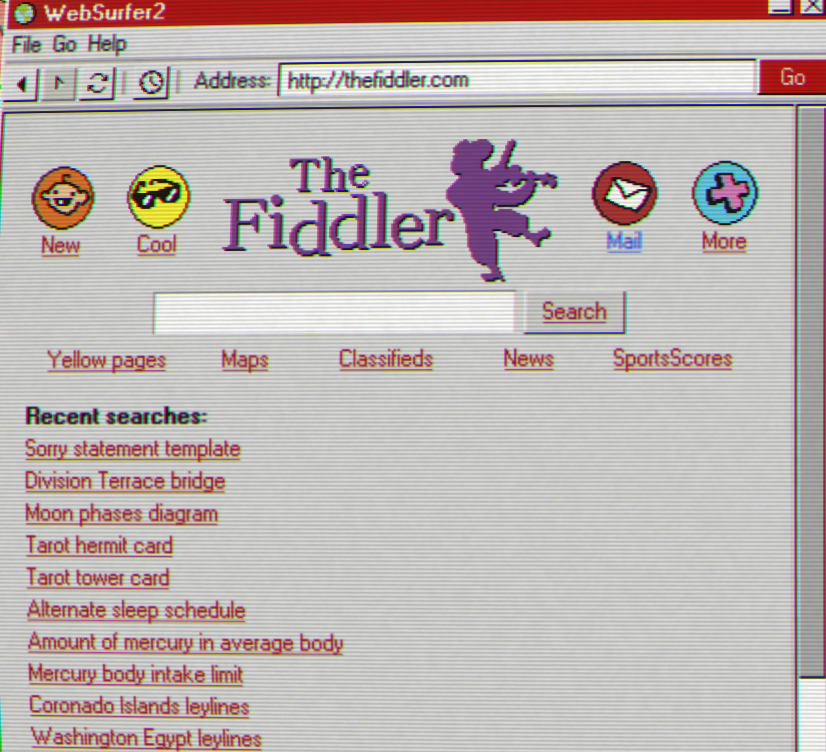
Not a malicious person, not an evil person, just someone that truly could not see the forest through the trees no matter how hard they tried. Drowning in the past and never able to move on, infecting those around them with it, acting like a quicksand that could drag someone down at any moment. I don’t even know if we ever find out why Admin is the way they are. Mental illness? A traumatic event? Just the way they were wired? Who knows? All we do know is that, due to their inability to understand someone else, to look beyond their world view, they created trauma in many other lives, including their own. Their inability (or unwillingness) to see other perspectives left them creating more problems than solutions, hurting more people in the process until they were all alone. Until all they could do was turn to the computer to ask for help that it couldn’t even give. “Sorry statement template”, another typed thing rather than an actual hand of compassion reaching out. The cold in their heart mixed with the cold of the machine. A lack of true human interaction. The steel of the EVA. An embrace only once the one you love is already gone. Not on purpose, but because there was an unwillingness to move forward. To accept. To grow.
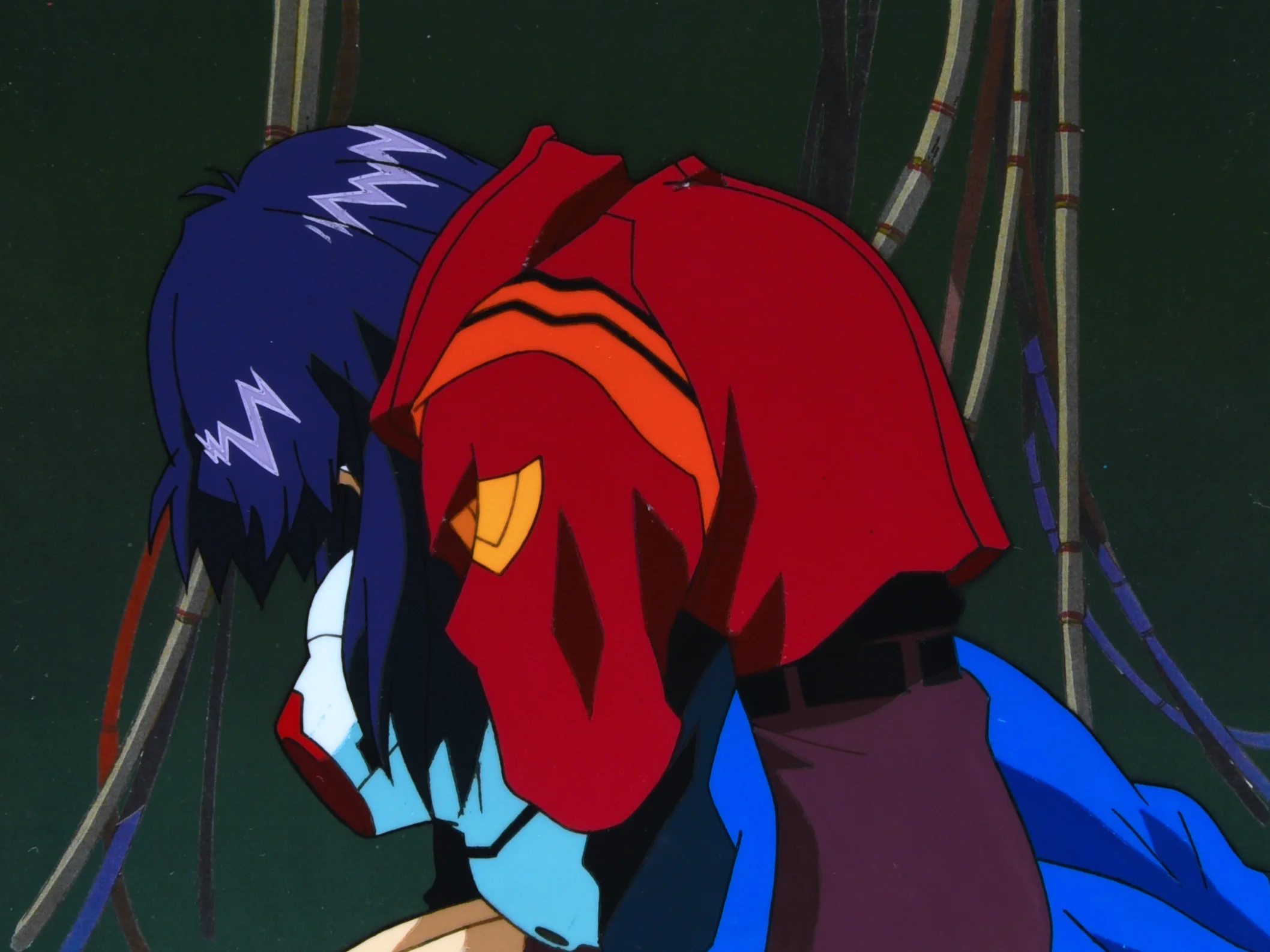
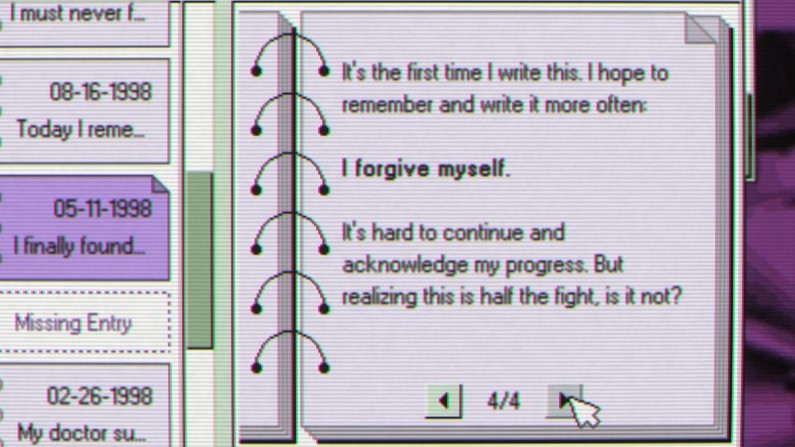
As we come to a close on Desktop Explorer, Guppy understands. “It was all an accident, no one is to blame in the end.” Perhaps there is blame. We could go ‘round and ‘round all day long assigning blame to someone for not understanding, for not acting, for not growing - but to what end? Will it change things? Or will it simply fester like an infected wound and spread to the rest of our body, our mind, and eventually our loved ones? At the end of the day, every moment we live turns into memories; memories that are only so important because of how they impact our actions moving forward. Finally, through your actions of playing through every puzzle, listening to every memory, every moment of trauma, you come to understand that no one is to blame for what happened. We’re all human. We all make mistakes, and while that doesn’t mean we don’t have to grow from those mistakes, there’s no sense in trapping yourself in them, living forever in them. Life happens. The world continues turning. It’s easy to blame yourself. It’s easy to hate. It’s hard to forgive. It’s hard to move on. But, at the end of the day, that’s all we can do. Take the good with the bad. Learn from it all. Grow from it. Try your best to create a life free from those traumas by understanding them, not by hiding from them, ruminating on them, or forgetting them.
Was Admin misguided in their creation of Desktop Explorer? Of course. Did their limited world view hurt those around them? Absolutely. But just as many of the characters in Evangelion do deplorable things that we later learn had, seemingly, positive motivations, Admin was also doing, seemingly, their best with the information at their disposal. After all, they say that the road to hell is paved with good intentions.
I’d like to wrap this review with a bit more talk about the game itself. The story, I felt, was absolutely beautiful - hence my entire write up about it and comparing it to one of my favorite pieces of media ever created - but I also had an absolutely wonderful time with all of the puzzles and I would be remiss to not mention that in some part of my write up.
To the puzzle masters of Desktop Explorer, bravo! There are absolutely puzzles that had me pulling out my hair, even after I figured out the solution, but many were among the most satisfying puzzles I’ve ever had the pleasure of completing. Oftentimes I find these fake-OS games have you looking around the internet or some program for a written password. Sometimes you may have to decrypt the phase through an established encrypting system, like morse or binary, but that’s about as far as it goes. However, the puzzles in this game were extremely in-depth, with many moving parts, a lot of memory recollection (in a game all about memory, I might add), and a ton of unique systems to interface with.
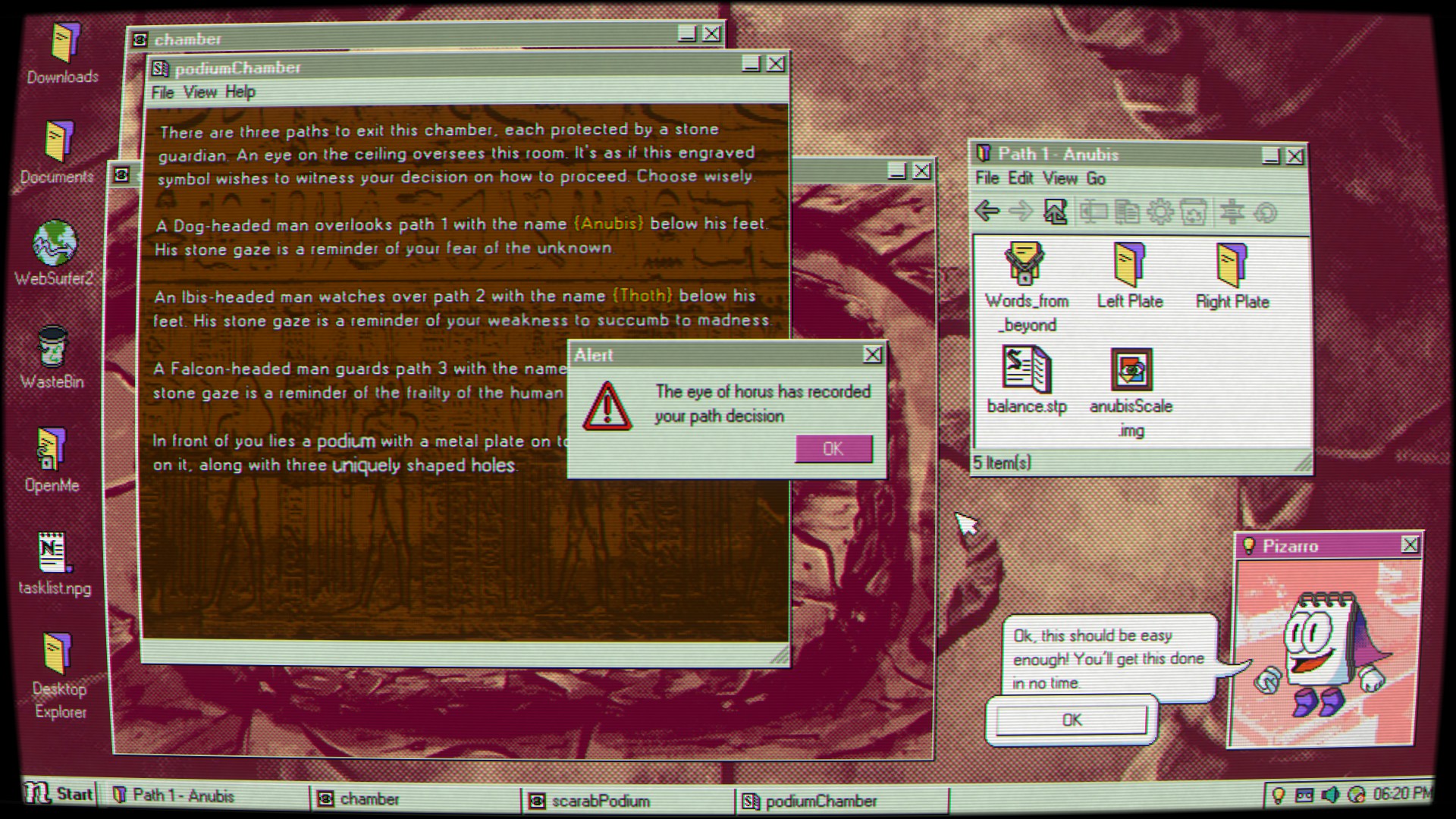
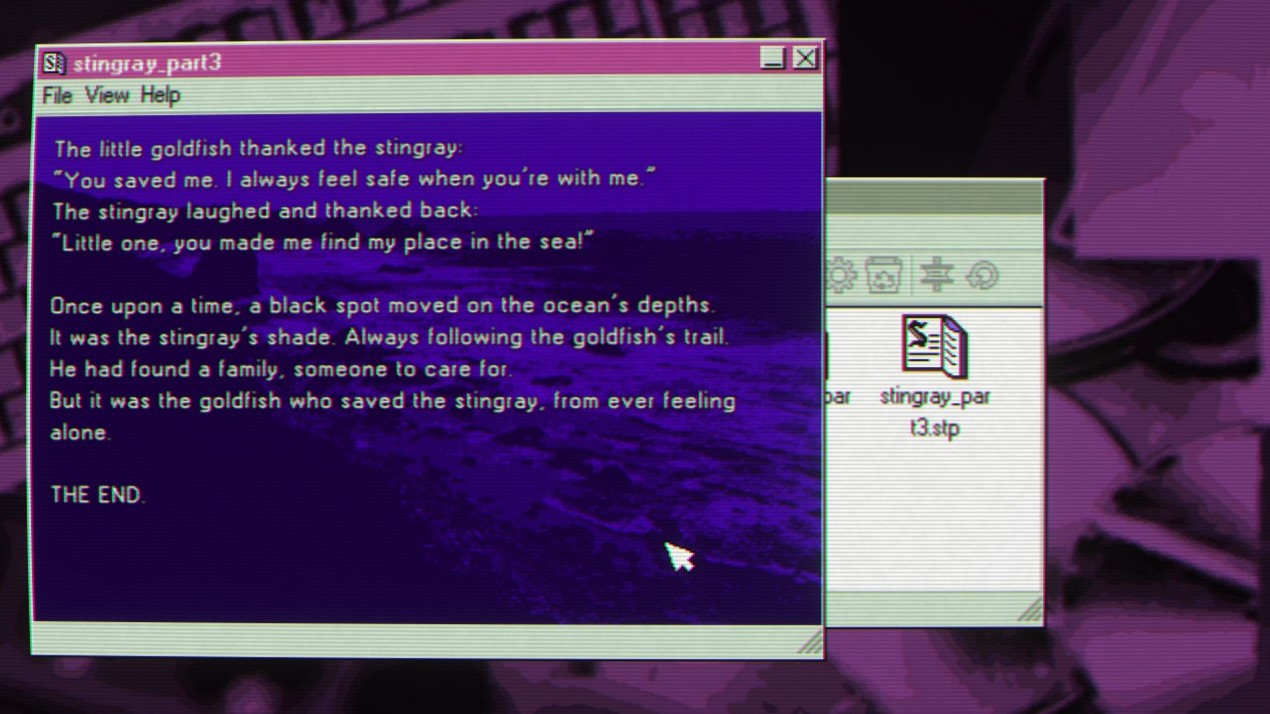
The game starts out with navigating the computer’s OS and using the OS’ unique formatting to assist in figuring out puzzles. For example, you can open the source code of many messages to see hints. Or some word puzzles in the notepad need to be formatted differently to read a password or get a clue. However, as time goes on, the puzzles start to integrate completely with other programs and you’re left navigating several windows at the same time to figure out one part of a puzzle. To say it’s complicated is an understatement. You’ll be playing an entire video game in one window, get an item from said game, open it in your file browser, change its format from an image to a text file, read a whole story about the image, figure out there’s another program you need to use to see a secret on the image, change the text file back to an image file, open the lens program so you can see the secret, get a clue about a screensaver, wait for the screensaver to populate so you can get whatever password is there, then go back to the original game to input the password to unlock another part of the world or puzzle. The way each and every program interacts with one another is truly stunning and, while I did see a few bugs myself and hear of others, it all works relatively seamlessly considering the sheer amount of moving parts.
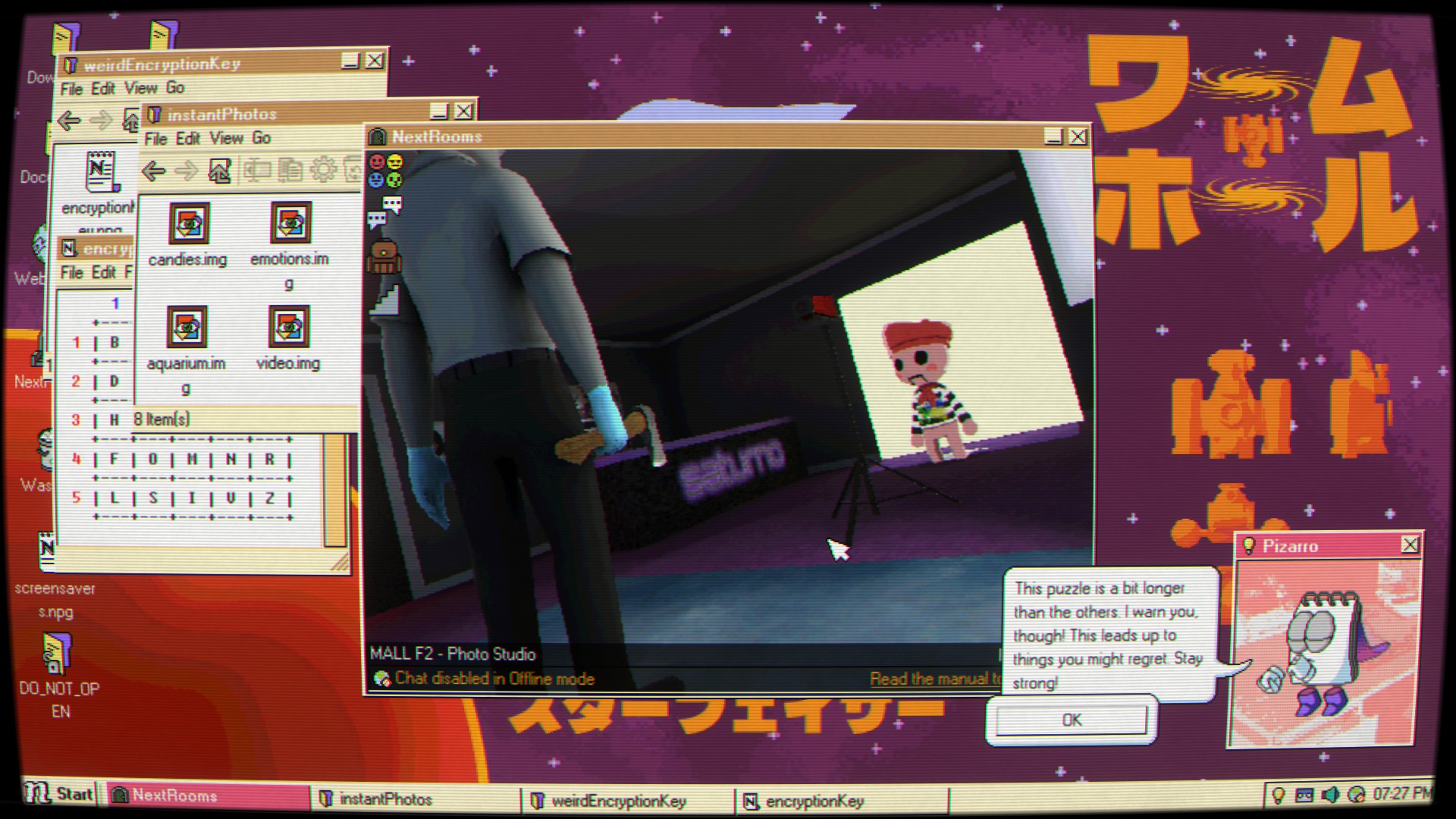
With all those moving parts comes UI and art design - all of which were equally as stunning as the puzzles. No moment was I ever taken out of the world due to design that felt discordant with the time period of the piece of equipment we were using, which I do find very often to be one of the bigger problems with fake OS or ARG-type content. Windows populated perfectly over or under one another. The roomies, characters within a program in-game called Next Rooms, are so cute I even had to draw my own OC version; which I rarely do for media so I feel like that lends credence to the fact that they are very well designed.
Really, truly, I just loved this game. The moment it was released I set aside two whole days to play it. I was in the discord giving (and taking) advice, talking about theories, sharing art and screenshots, asking developers questions. This game absolutely consumed me, much like the virus was consuming the computer and all the programs and memories left on it. I was obsessed and I adored my time with it, but now it’s just a memory. “What matters most is what I do with them now.”
My memories, that is. I hope to create new, beautiful ones.
**Disclosure: A key was provided for this review**