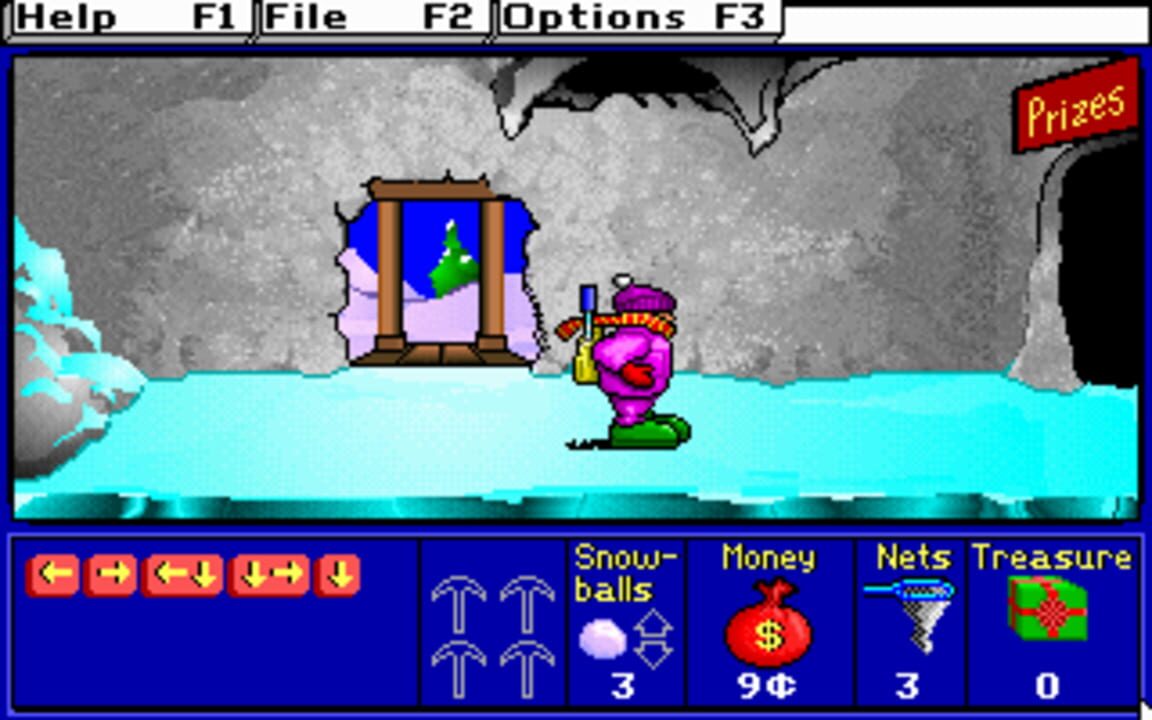
I played a lot of video games growing up, and when I say a lot I mean a lot. As far back as I can remember I was on the computer playing games like Math Blaster, Treasure Mathstorm, and Putt Putt Saves the Zoo, just to name a few. These quickly evolved into web browser games like Cool Math, Neopets, and Nick.com before eventually evolving even further into full on game systems (I think my first ever was a Gameboy Advance, but I also had a PS2 and Gamecube that I played extensively).
That all is to say, when we talk about nostalgia in gaming and point to low poly 3D graphics I nod my head in agreement, but truly where nostalgia hits me the hardest is with 90s (perhaps early 2000s) CD-Rom point-and-click adventures. A genre, mind you, that I feel I don’t see near enough for how iconic it is. Don’t get me wrong, I love me a low poly 3D adventure game, and I admire 2D side scrolling, especially when it feels the wheel has been reinvented, but where are all my point and click child-like adventures? Where is the wonder? The mystery? The… eerieness of it all?
Cue Endacopia, the love of my life. Despite being worked on for at least 4 years, and being developed by an artist I follow and quite like, I hadn’t heard of Endacopia until Steam’s Next Fest event that took place in June of this year. Lo and behold, it’s everything I’ve ever wanted from a modern, adult rendition of classic children’s point-and-click adventures.
As mentioned, Endacopia is a “point-and-click” adventure game. Mostly. What I mean by that is that, while it is classically designed for the player to point and click on things as a means of interacting, there’s also slightly ‘modern’ W A S D movement that allows you to more freely explore the spaces within Endacopia; as opposed to things like Putt Putt or Pajama Sam that are purely point-and-click, movement included. This not only allows for deeper exploration of the space, but also allows for puzzles and hazards to be movement based which AndyLand, the developer, utilizes to his fullest in Endacopia. Multiple puzzles or actions are based on navigating the space using WASD, which may not sound like much but when paired with the traditional point-and-click genre I think it makes for some truly interesting, thought-provoking, and even heart-pounding moments.
Cutting right to the chase, what I find so endearing about Endacopia is its medley of styles and tones, which is something I think a lot of point-and-click games have done as well; especially in the children’s genre, albeit perhaps unintentionally. This medley of big, expressive characters with wild designs and colorful worlds juxtaposed against the harshness of certain textures, certain bits of audio (or lack thereof), and genuinely horrifying visuals hits an extremely nostalgic and specific bone in my body that I adore. While games I played when I was younger didn’t get quite so horrifying, which is why I say this is an “adult rendition” of that classic genre, they did scare and sometimes even horrify Kid Me. The empty map in Putt Putt once you had completed all your tasks and everyone was waiting for you creeped me out. The harshness of the snowy mountain in Treasure Mathstorm always made the journey feel tense and every move feel important. A sunken ship in Adventures with Barbie Ocean Discovery felt like a warning of some unknown threat, lying in wait. This feeling is what, I think, makes creepypastas and, now more popularly, ARGs so enticing and feel so truly nostalgic. Sure, the retro visuals help with that, but many of us made seemingly innocuous moments in media a little creepier in our heads when given the opportunity to ruminate on it for too long as kids and I think that’s what really makes a piece of media creepy, nostalgic, and stand out among the rest in its class. Endacopia does this brilliantly. This game takes moments of peace, of childish joy and blends them with horror in such a fantastic way that I haven’t felt since I was young. Lulling me into a sense of comfort, only to (literally) whack me upside the head with something seriously jolting.
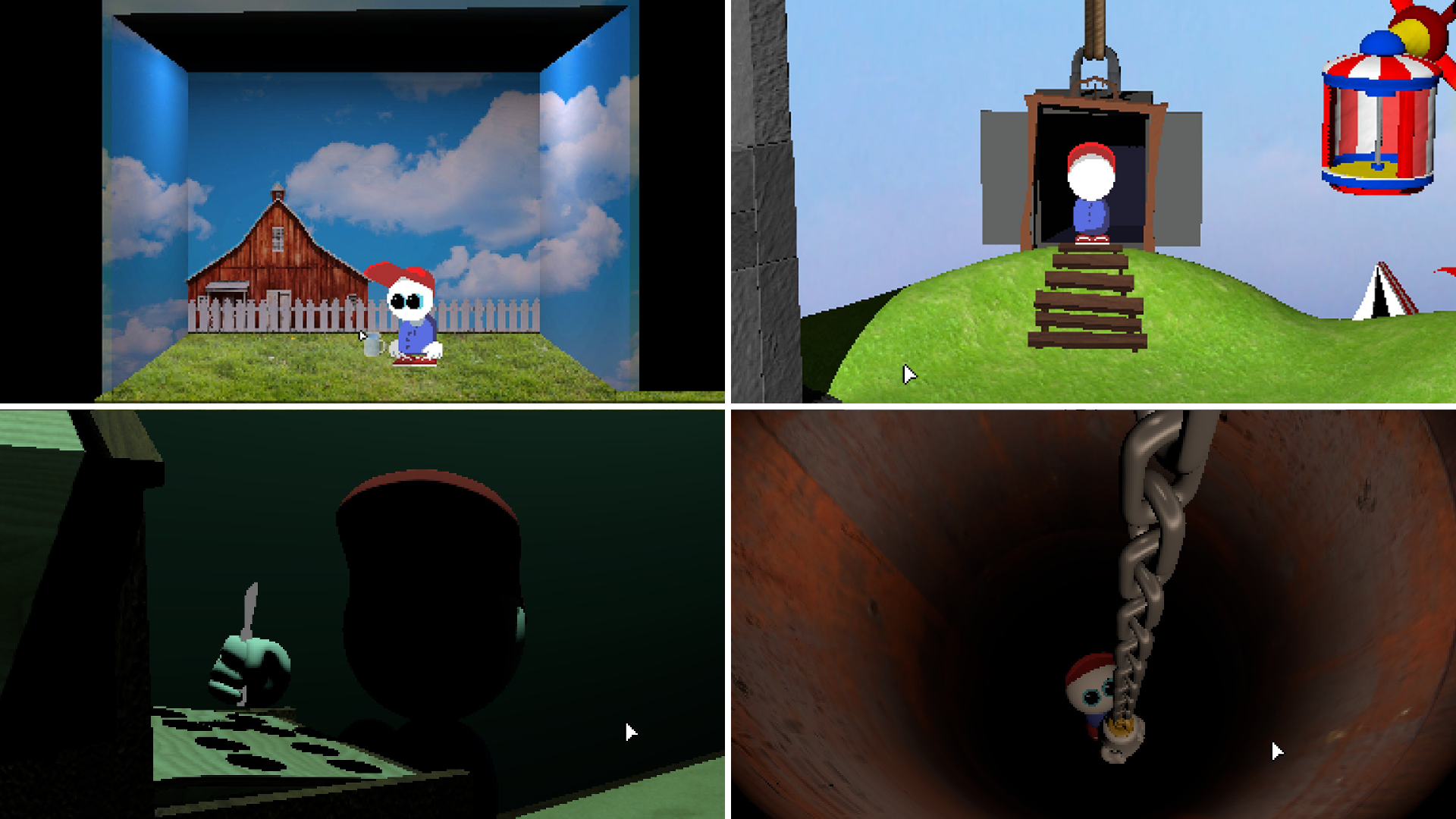
I could go on to praise the puzzles, the characters, the music, the visuals, the gameplay.
I should.
I will.
The puzzles are fantastic and really had me thinking out of the box and engaging with mechanics while also incentivizing exploration.
The characters are all wonderfully written, funny, interesting, and beautiful to look at. Every single new character you get to meet is a treat and I was always happy to exhaust all dialogue before moving on, just because it was so engaging.
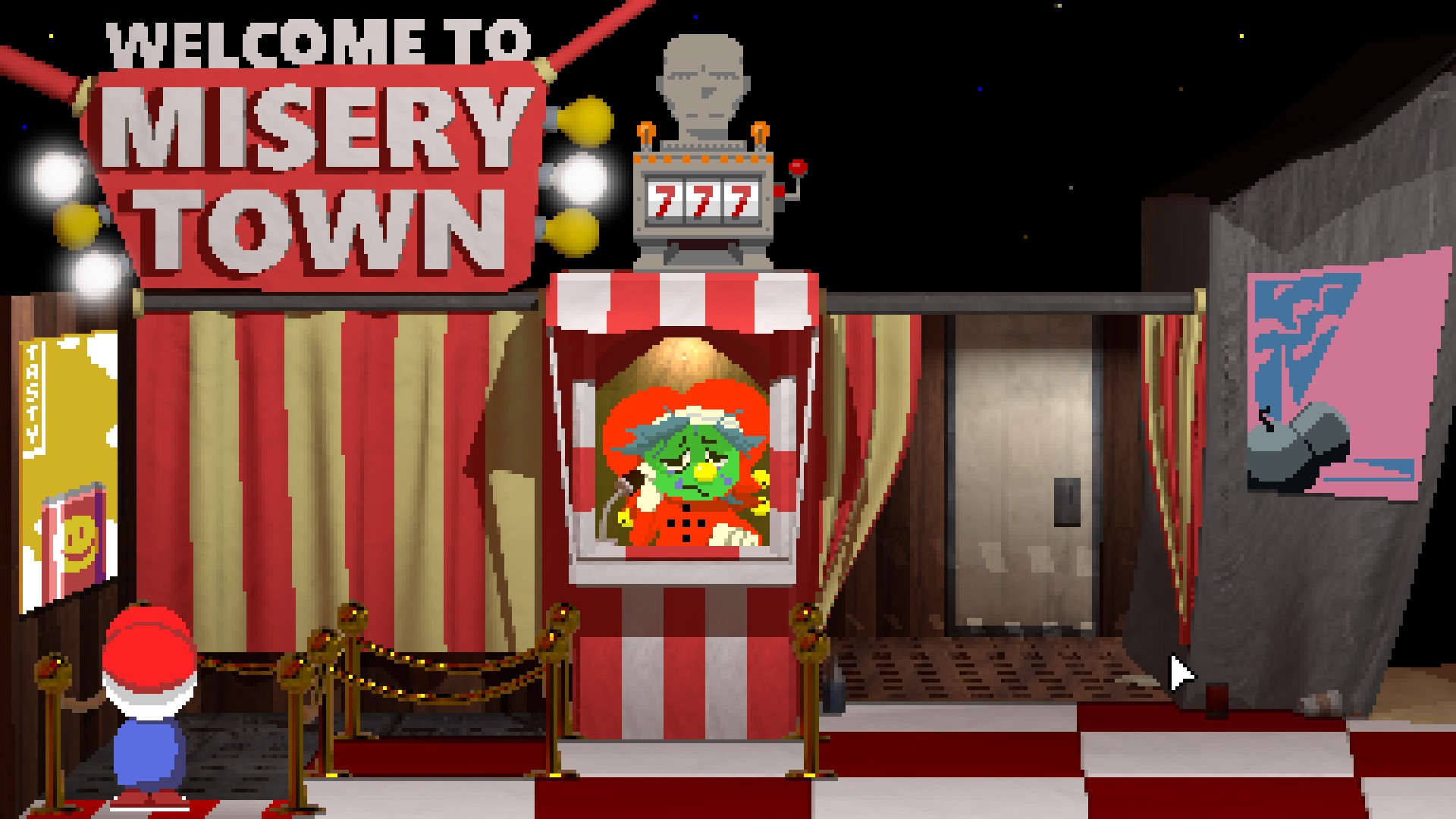
The music is fantastic, no notes. There’s a particular song, Misery Town, that absolutely shocked me with how much it evoked classic point-and-click games. Seriously, go actually watch a couple moments of some of the games I have linked in my first paragraph and then listen to this song and tell me it isn’t perfect. Astonishing.
The visuals, as I’ve stated, are a beautiful marriage of bright and childish with disfigured and gory. Not just that, but the visual styling is consistently switching between pixel sprites and high poly 3D models. Yes, I meant high poly when I said it; which is another wonderful juxtaposition from the extremely retro visuals that we are usually and most often presented with and mirrors the aforementioned visual juxtaposition. Each and every screen is filled with things to look at and, usually, click on to interact with as well. Even if an item is not useful, it can still usually be clicked on to trigger a small animation, similar to old school children’s point-and-click games, (you even get an achievement for one of these interactions).
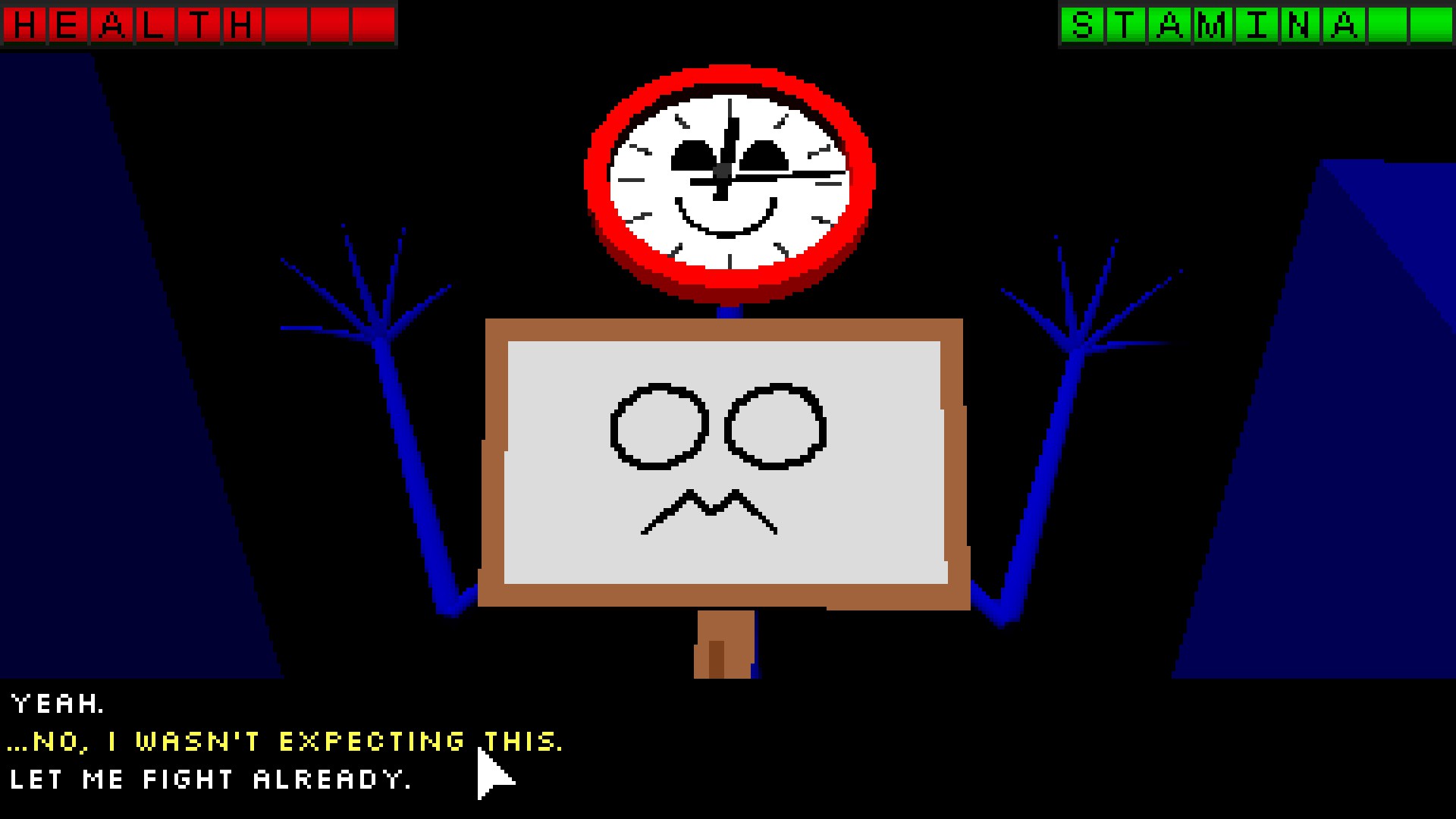
The gameplay is chaotic and constantly asking different things of you, the player; which I also found to mimic old school learning games that felt like they always had some new mechanic they expected you, a literal 6-year-old, to know. Obviously it was more distressing when I was a kid, as I had no idea how to play games back then, but the way Endacopia’s gameplay shifts are more often than not sprung on you in the heat of a moment with a fail state waiting for you if you misstep really reminded me of how it used to feel to play these types of games when I was a child while still being a wholly unique and engaging experience for Adult Me. While I think a lot of the shifts in gameplay are best experienced without knowing too much about them ahead of time, I will say that one of my favorite shifts, and one that happens most consistently, is the boss fights. There are at least 15 in the game (spoilers, oops) and they all involve your character, named Mellow, fighting them first person à la Punch Out! gamplay (aka block incoming punches, punch back when the opponent is vulnerable). These sequences were always extremely fun, engaging, and sometimes pretty challenging. I always felt like I was opening a little gift when I was able to fight a new boss.
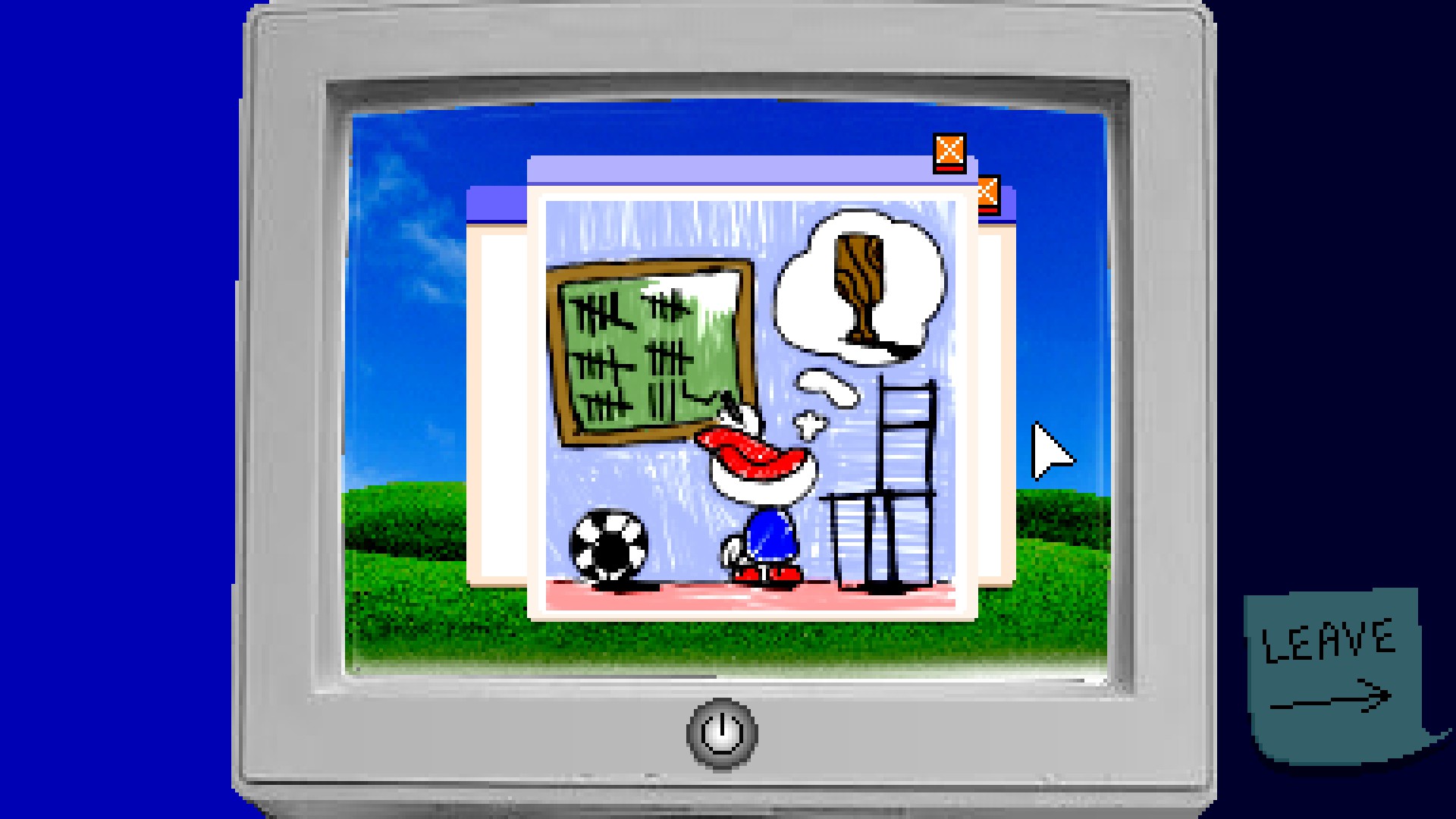
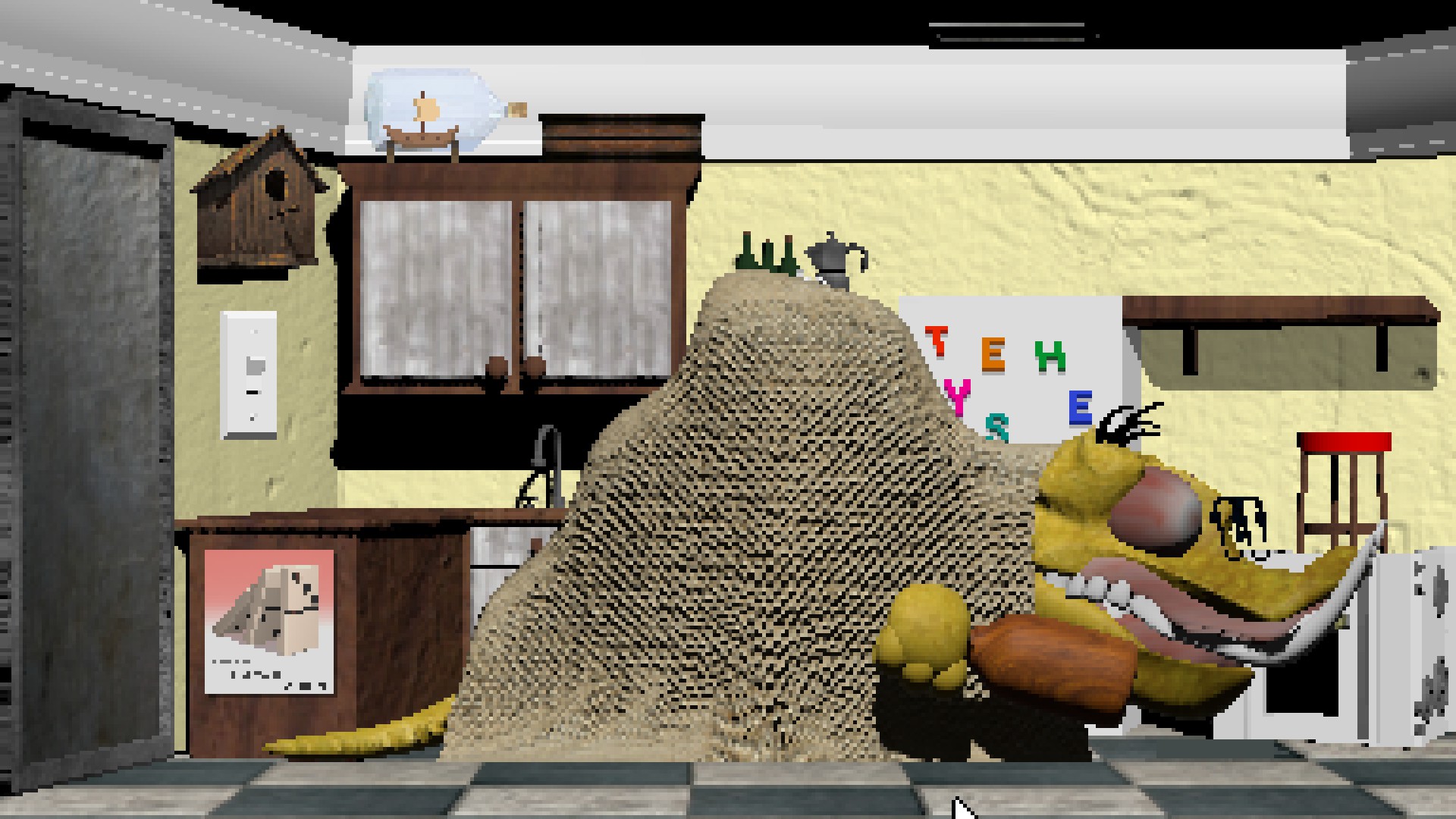
With all of that said, the main thing that I wanted to praise the game for was the plot. While I won’t be spoiling any late game (or even multiple ending) content, I will be highlighting the early game facts that lay out the basis for the rest of the plot. Early in Endacopia, before even leaving the first room, we can see that Mellow, our main character, suffers extreme abuse at the hands of his guardian, Henry. We find evidence of Mellow recounting how many times he’s been hit on the head with a bat by Henry, or ‘bonked’. We see the fridge has an intricate lock to prevent someone from accessing it. When out of his room, we see Henry aggressively looking for Mellow and, if found, we see proof that Henry hits Mellow so hard in the head that he often forgets large amounts of information and time. Some dialogue with a recurring character, The Surgeon, also alludes to the idea that Henry hired him to make a creature that would watch over your actions, which eventually becomes a boss you must fight to move forward. All of this before leaving the first area of the game.
So it’s clear Henry abuses Mellow. Okay, so what? Why is that relevant to the discussion of the game? Well, I think it’s the whole reason the game even exists in the state it does. I don’t want to suggest anything about the creator and his motives in creating this work, but from my personal experience it really takes someone that went through abuse to understand it well enough to offer a re-telling of it to an audience of people. It isn’t lost on me that many people simply do not understand what it’s like to be a child in a compromised situation like an abusive household. That’s not a bad thing, of course, but it also means that I don’t think there are any coincidences when it comes to literary and visual allegories here in Endacopia.
Remember when I discussed feeling creeped out by seemingly benign moments from childhood games earlier? Similar to not feeling safe in their own home, a child can project those feelings of danger onto other situations or things, like media for example. Psychologists call this phenomena enhanced threat bias, which is basically when a child responds to everyday innocuous events as though they were dangerous. This can lead to an empty room feeling scary. A change in audio cues is now distressing. A colorful environment with a drop of darkness is now a sign of danger. All, most likely, harmless, but to a child that doesn’t know what is and isn’t ‘safety’ all these things can suddenly point to danger. In Endacopia those little signs, the empty room, the lack of audio, the dingy spot on the floor all point to real, verifiable danger. Danger that our character Mellow, a child, must face when simply trying to elude his abusive environment. These are supposed to be “adventures” Mellow is going on and, when interrupted, he seemingly really wants to get back to those adventures, despite the danger that’s lurking. Why? Well most likely because it’s an allegory for his escapism. As a child with no agency, defeating a bad guy in a fictional world can feel really good. Humans are great at projecting and imagining. Plus, as a minor spoiler, every main boss you beat is upholding and enhancing an abusive environment that you, Mellow, save everyone from. I think you can see where I’m going with this.
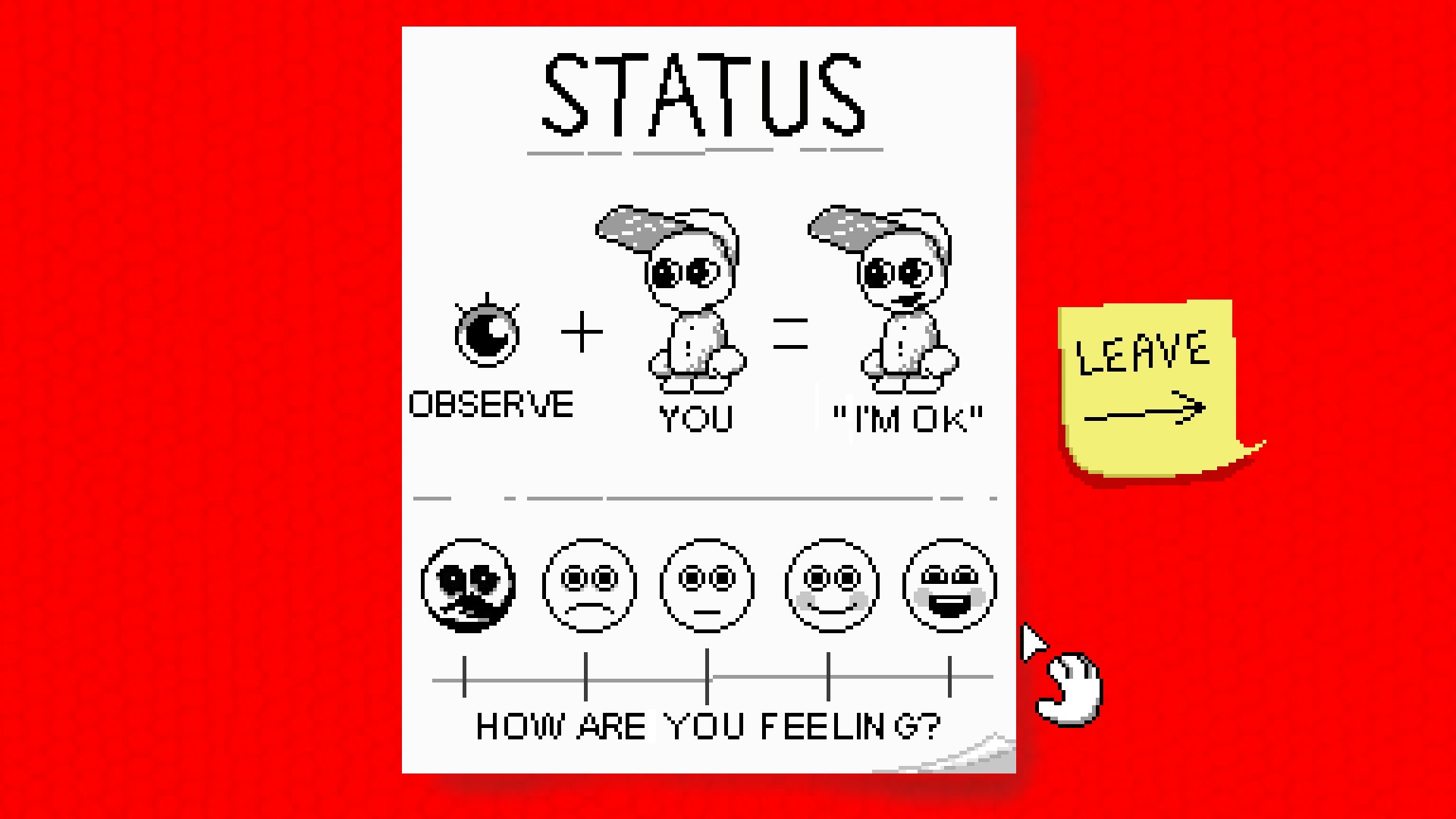
When I say that we, the player, are playing as Mellow that isn’t quite true. It’s more that we're guiding him, as some sort of protector. His actions are his own, but we tell him what to do and where to go. No agency, just doing what he’s told. Lucky for him we’re a benevolent angel. The reason I bring this up is so I can talk about one final mechanic I hadn’t mentioned yet. You see, in the game there are three ways to interact with things: talk, touch, and look. Each of these options can be used to interact with things in the world, but also to interact with Mellow. The one I want to focus on is, probably, the least useful.
Talking to Mellow will bring up an NPC, Tip, to give us some advice; very useful.
Touching Mellow will open up his inventory; also very useful.
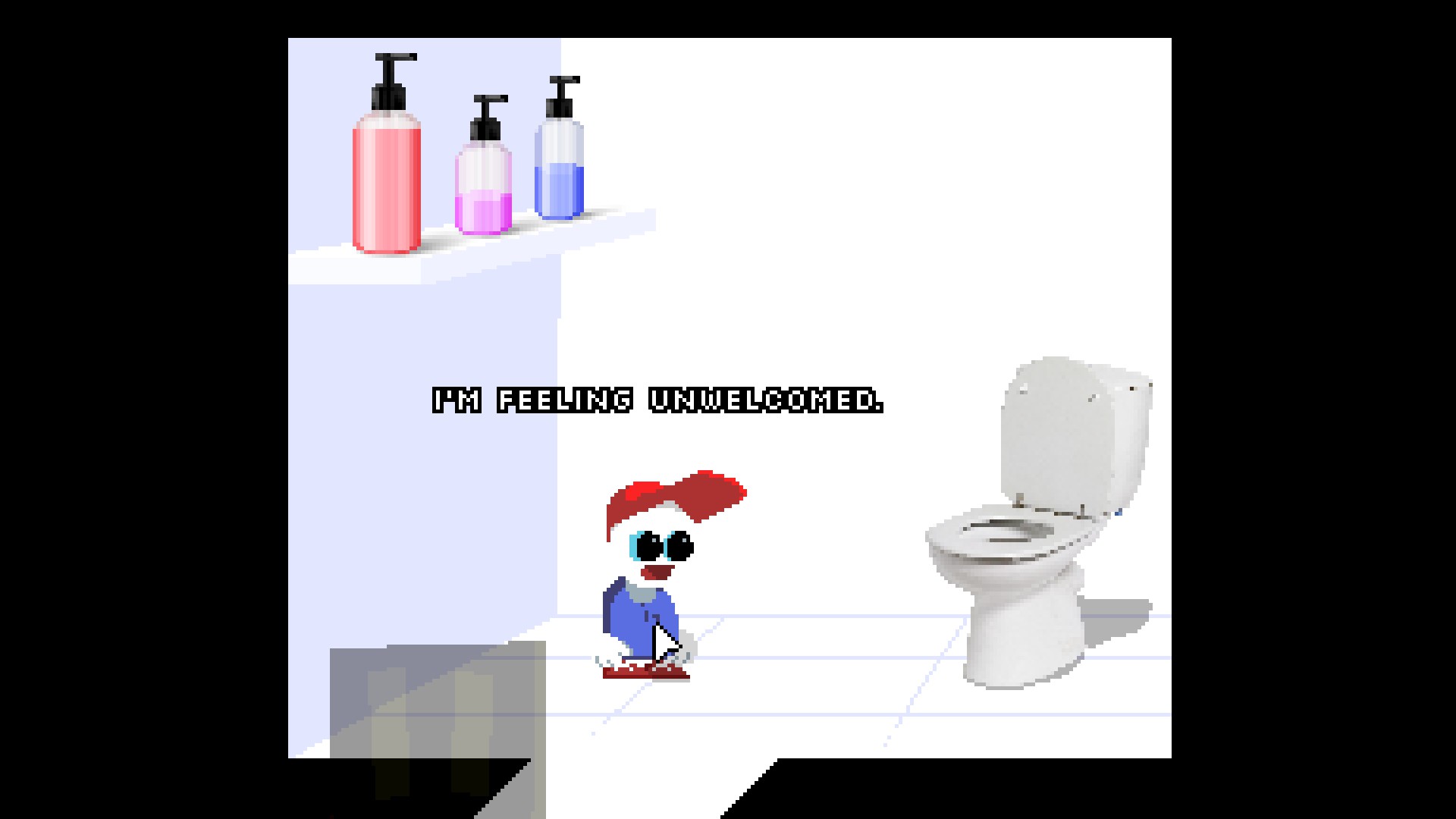
Looking at Mellow will tell you how he’s feeling during a given moment. Useful? Debatable, as I personally found no use for it during my 10 hour playthrough. However, I think it’s the most important of the three. In this game that seems to be an allegory for a child in an abusive home, using idealistic things like literal escape into imaginary adventures and defeating bad guys with your own two hands, being able to ask Mellow how he’s feeling just to do it is so impactful and it really drives the themes home. At no point is it even really relevant what Mellow is feeling. Usually it’s obvious, perhaps a bit humorous, but that’s about it. A small chuckle or an unnerving feeling, but nothing more. Yet it’s an entire mechanic built into the game, something supposedly so important you’re told about in the tutorial at the very beginning of your time with Endacopia. It isn’t tacked on or forgotten about either, every single room and every progressing moment makes Mellow feel something new and unique. The game asks you to check on Mellow throughout your journey, despite there being no real gameplay advantage in doing so; just the desire to know he’s safe and okay. You are his guardian angel, after all, so wouldn’t you want to know how he's doing? You’re not dismissive of his emotions and desires like Henry is. Like abusive guardians are. Like many parents can be. You care, and so you will click on him again and again and again and again, simply to hear him tell you how he's holding up.
I’m getting a bit emotional by the end of this one. I think it’s quite the idealistic story, protecting a child from abuse and helping them overcome it. Especially from the perspective of someone that was in similar situations, it feels almost like a dream; a beautiful dream I never want to wake up from. A world where this child can be saved, where all his imaginary friends are real and they all love him and look out for him when you’re no longer there. A world where the bad guy can be defeated once and for all. Media like this, with writing like this, makes me believe it won’t always be a dream, too. That one day every child will be protected and loved and taken care of.
I’m know I’m sounding pretty existential over what is realistically a decently humorous and slightly spooky point-and-click indie but I really resonated with what I felt and what was was being shown here. I wanted to talk about Endacopia on a level deeper than “mechanics and art good” because, yes, they are but there’s also so much more here that I truly think will leave a lasting impression on the majority of people that play this game. AndyLand makes some phenomenal visual content, but now it’s clear that he has that special ‘Sauce’ we always look for in creatives.
I adored Endacopia, in case that wasn’t evident by now. I think this will easily find its way to my “best of” list for 2026, but only time will tell. Check it out on Steam, I highly recommend giving it a try and experiencing it for yourself.